


A TENUOUS ceasefire between the United States and Iran came under severe strain on Monday after Washington said it had intercepted and seized an Iranian cargo vessel attempting to breach a maritime blockade, prompting Tehran to vow retaliation and reject immediate prospects of renewed peace talks.
The escalation has intensified fears of a wider regional confrontation, with both sides hardening their positions amid ongoing disruptions to shipping routes through the Strait of Hormuz, a critical passage for global energy supplies.
Reuters reported Iranian Foreign Ministry spokesman Esmaeil Baghaei said Washington was not acting in good faith in pursuing diplomacy and insisted Tehran would not shift from its stated conditions.
“Washington has shown it was ‘not serious’ about pursuing the diplomatic process,” he said, adding that Iran would not accept deadlines or ultimatums in negotiations involving its national interests.
A senior Iranian source told Reuters that continued US enforcement of maritime restrictions was undermining prospects for dialogue, while stressing that Iran’s defensive capabilities, including its missile programme, were non-negotiable.
Meanwhile, a Pakistani security source said Islamabad’s chief mediator, Field Marshal Asim Munir, had informed US President Donald Trump that the blockade was obstructing talks. Trump, according to the source, said he would consider the assessment.
Tensions escalated further after the US military confirmed it had intercepted an Iranian-flagged cargo ship bound for Bandar Abbas following a prolonged six-hour standoff.
The vessel’s engines were disabled during the operation, which US Central Command said involved Marines boarding the ship from helicopters.
Iranian state media described the incident as “armed piracy”, with military officials warning they were prepared to respond to what they called blatant aggression, though operational constraints involving civilian crew members reportedly limited immediate retaliation.
The confrontation has added pressure to already fragile diplomatic efforts, with Pakistan attempting to facilitate negotiations ahead of the expiry of a two-week ceasefire window. However, Iranian officials indicated that no new talks are currently planned.
Baghaei said Tehran would not engage under what it views as coercive conditions.
Iranian officials also accused Washington of maintaining unrealistic demands, with Baghaei stating that the US had adopted “some unreasonable and unrealistic positions”.
First Vice President Mohammadreza Aref warned that restrictions on Iranian oil exports would have wider consequences for global energy stability.
“Either a free oil market for all, or the risk of significant costs for everyone,” he wrote on social media.
Global markets reacted sharply to the developments, with oil prices rising more than six per cent amid concerns that renewed conflict could further disrupt shipping through the Strait of Hormuz, which carries roughly one-fifth of the world’s oil and liquefied gas.
The United States has maintained a blockade on Iranian ports, while Iran has intermittently imposed and lifted restrictions on maritime traffic through the strategic waterway.
The US administration has also issued strong warnings against Tehran, with President Donald Trump cautioning that further escalation could trigger strikes on Iranian infrastructure, while Iran has said it would retaliate against regional energy facilities if attacked.
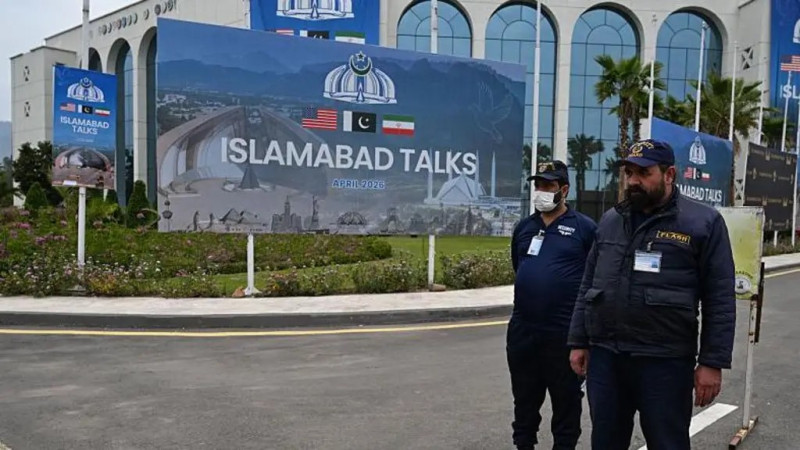
Preparations for diplomatic engagement in Pakistan continued despite uncertainty over whether talks would proceed. Islamabad has reportedly deployed nearly 20,000 security personnel in anticipation of high-level discussions involving US and Iranian representatives.
However, conflicting signals from Washington have added confusion, with reports indicating changes in the composition of the US delegation shortly before the expected arrival in Islamabad.
European allies have expressed concern that negotiations may prioritise rapid outcomes over technically detailed agreements, warning that complex follow-up negotiations could still be required.
The broader conflict, now entering its eighth week, has already caused significant regional instability, with thousands reported killed across multiple theatres and parallel escalations involving Israel and Lebanon contributing to the wider crisis.
Iran has responded to strikes with missile and drone attacks against Israel and neighbouring states hosting US forces, further deepening fears of regional spillover as diplomatic efforts remain stalled. - April 20, 2026










