


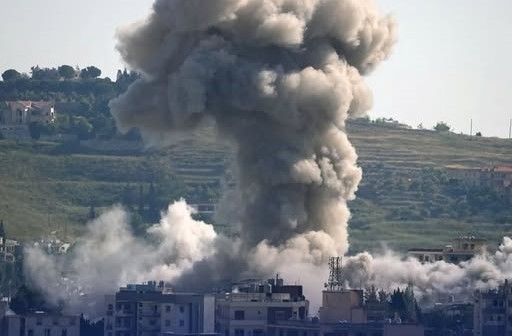
THE fragile ceasefire that halted direct hostilities between the United States and Iran is facing renewed strain after American forces carried out strikes against Iranian military infrastructure following what Washington described as an imminent threat to international maritime traffic.
AFP cited the US military confirmed that its forces attacked coastal surveillance radar facilities in southern Iran on 5 June after intercepting four Iranian one-way attack drones allegedly launched towards the strategically vital Strait of Hormuz.
According to US Central Command, the drones were shot down before they could reach their intended area of operation, prompting retaliatory strikes on radar sites located in the city of Goruk and on Qeshm Island.
“The attack drones posed an immediate threat to regional maritime traffic,” the command said, adding that the strikes against the radar facilities were intended to “defend against further attacks”.
The latest military action represents one of the most significant confrontations since a ceasefire between the two adversaries took effect on 8 April, ending weeks of intense conflict that destabilised regional security and rattled global energy markets.
Despite the cessation of major hostilities, diplomatic efforts aimed at transforming the truce into a lasting political settlement have made little progress, leaving the region vulnerable to renewed escalation.
The incident comes as President Donald Trump faces increasing domestic and international pressure to prevent the conflict from spiralling back into full-scale warfare.
The war's economic consequences, particularly its impact on global markets and energy supplies, have intensified scrutiny of the administration's handling of the crisis, while political concerns are growing ahead of upcoming midterm elections.
In an interview with NBC News on 5 June, Trump acknowledged that Iran continues to retain a significant portion of its military capabilities despite months of conflict.
“They have some missiles, they have some drones. I would say, percentage wise, maybe 21, 22 percent of their missiles,” Trump said.
His remarks suggest that US intelligence assessments believe Iran still possesses sufficient military assets to pose a credible threat to regional security and American interests.
The exchange of accusations between both sides has further heightened tensions in the Gulf.
Iran's military claimed on 5 June that it had launched what it described as “warning missiles” towards two US destroyers operating in the Gulf of Oman, a statement swiftly rejected by the American military.
The competing narratives underscore the growing risk of miscalculation as both countries continue military operations in close proximity despite the ceasefire.
Earlier in the week, Kuwait reported intercepting 30 ballistic missiles which it described as part of “heinous Iranian aggression”, adding another layer of concern to an already volatile regional security environment.
The Strait of Hormuz remains a particular flashpoint. The narrow waterway serves as one of the world's most important energy transit routes, carrying a substantial share of global oil exports. Any disruption to shipping through the strait carries potentially significant consequences for international trade and energy markets.
While neither Washington nor Tehran has formally declared the ceasefire dead, the latest military exchanges highlight the growing gap between the existence of a truce on paper and the reality of continuing confrontations across the region.
With negotiations stalled, military incidents increasing and both sides continuing to test each other's resolve, analysts warn that the ceasefire is entering a critical phase in which even a limited confrontation could trigger a broader deterioration in relations.
For now, the conflict remains contained, but the latest strikes demonstrate how quickly tensions between the United States and Iran can re-emerge despite ongoing diplomatic efforts to secure a more permanent peace. - June 6, 2026










