


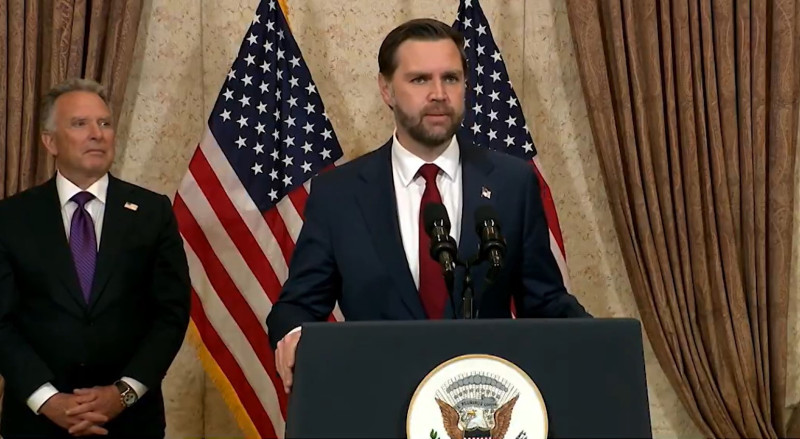
EFFORTS to transform a fragile 60-day ceasefire into a permanent peace agreement between the United States and Iran have suffered a significant setback after Switzerland confirmed that scheduled negotiations would not take place, while US Vice-President JD Vance abandoned plans to travel to the country.
The collapse of the planned meeting at the Swiss resort of Burgenstock has intensified uncertainty over the future of the US-Iran peace accord, with Tehran insisting it first wants evidence that Washington is implementing the interim agreement before committing to further negotiations.
"The logistics of these negotiations have never been simple or predictable,” Reuters reported a White House spokesperson saying in a statement on Thursday night. Vance and the US delegation had been ready to depart as soon as plans were finalised.
Switzerland's foreign ministry confirmed that the talks had been cancelled but did not provide further details. Iranian authorities have yet to comment officially, although the semi-official Tasnim news agency reported that Tehran had not confirmed whether its delegation would travel.
The negotiations were expected to focus on technical aspects of the landmark 14-point agreement reached on Wednesday, which extended the ceasefire by at least 60 days and established a framework for resolving disputes over Iran's nuclear programme.
The accord followed nearly four months of conflict that erupted on 28 February after US and Israeli air strikes on Iran. The war has claimed at least 7,000 lives, disrupted global energy markets and fuelled sharp volatility across international financial markets.
Despite the diplomatic breakthrough between Washington and Tehran, Israel has continued military operations against the Iranian-backed Hezbollah movement in Lebanon, raising fresh concerns over whether the wider regional ceasefire can endure.
Political pressure has also mounted in Washington, where several Republican lawmakers questioned whether President Donald Trump had compromised too heavily after previously insisting the conflict would end only with Iran's "UNCONDITIONAL SURRENDER."
Instead, the agreement grants Iran substantial sanctions relief, unfreezes tens of billions of dollars in assets and allows immediate waivers for Iranian oil exports while negotiations continue.
Iran's Supreme Leader Ayatollah Mojtaba Khamenei dismissed the agreement as a sign of American weakness.
"Trump had signed the deal 'out of desperation'," he said, while warning that future nuclear negotiations would remain difficult.
"If the American side wants to be too demanding, we will not accept it," he said.
Under the agreement, negotiators have 60 days to reach a comprehensive settlement on Iran's nuclear programme unless both sides agree to extend the deadline. The deal also establishes a US$300 billion reconstruction fund for Iran alongside additional financial incentives.
Washington has said it will continue pressing Iran to curb its long-range missile programme and believes negotiations could still produce a stronger nuclear agreement than the 2015 accord abandoned during Trump's first presidential term.
However, critics argue that Iran has emerged from the conflict in a strengthened strategic position after surviving a direct military campaign, retaining control over highly enriched uranium through monitored on-site down-blending, maintaining influence over the Strait of Hormuz and securing significant sanctions relief.
Meanwhile, oil prices eased after commercial shipping resumed through the reopened Strait of Hormuz, although Iran has indicated it intends to introduce transit service charges once the current negotiation period expires.
The regional security picture remains volatile, with fresh Israeli air strikes in Lebanon reportedly killing at least 15 people on Friday, further testing the durability of the ceasefire and exposing growing divisions between Washington and one of its closest Middle Eastern allies over the future course of the conflict. - June 19, 2026










