


THE United States and Iran have entered a new phase of diplomatic engagement with senior officials from both countries meeting in Switzerland for high-level peace negotiations aimed at securing a lasting settlement after nearly four months of conflict.
The talks, taking place under a 60-day ceasefire agreement brokered by Pakistan and signed earlier this week by U.S. President Donald Trump and Iranian President Masoud Pezeshkian, are expected to focus on Iran's nuclear programme, regional security and measures to preserve the fragile truce.
Despite the diplomatic breakthrough, uncertainty continues to cloud the negotiations after Iran's Islamic Revolutionary Guard Corps declared the strategically vital Strait of Hormuz closed, a claim strongly disputed by the United States military, which said commercial shipping had continued uninterrupted through one of the world's most important energy corridors.
According to U.S. Central Command, 55 merchant vessels carrying more than 17 million barrels of oil safely transited the Strait on Saturday, adding that American forces would continue to safeguard international maritime traffic.
Reuters cited US President Donald Trump also sought to reassure global markets, saying in a social media post that no tolls would be imposed on vessels using the Strait of Hormuz during or after the ceasefire period unless negotiations collapsed.
Trump also left open the possibility of introducing a U.S.-administered transit fee should diplomacy fail, describing it as payment "for services rendered as the Guardian Angel to the countries of the Middle East."
Iran, however, questioned Washington's commitment to the interim agreement.
Mohammad Mokhber, an adviser to Iranian Supreme Leader Ayatollah Mojtaba Khamenei, accused the United States of failing to honour the first provision of the 14-point accord, which called for a comprehensive ceasefire across all fronts, including Lebanon.
He warned that until the agreement was fully implemented rather than remaining "only on paper", energy flows from the Middle East would continue to face disruption.
The Iranian delegation is headed by chief negotiator Mohammad Baqer Qalibaf and Foreign Minister Abbas Araqchi, alongside senior officials responsible for national security, monetary policy and the oil sector.
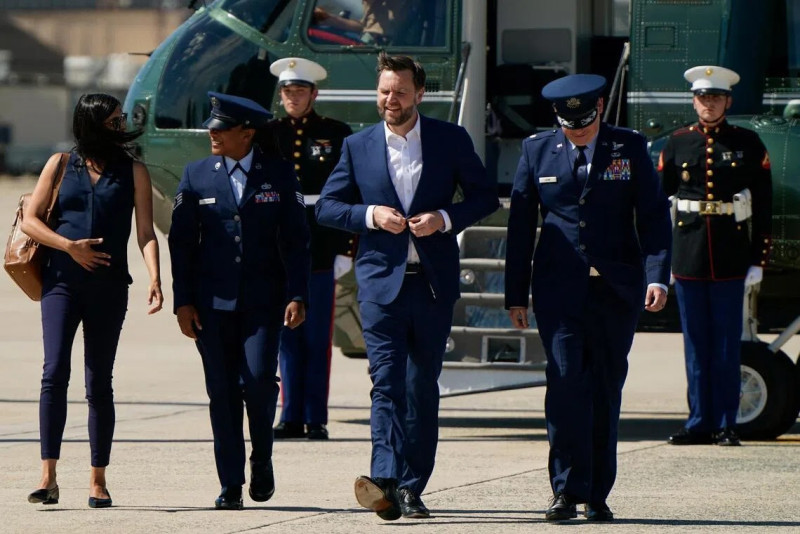
Representing Washington are Vice President JD Vance, Special Envoy Steve Witkoff and senior adviser Jared Kushner, who are expected to spend several days in negotiations.
Before departing for Switzerland, Vance expressed confidence that diplomacy could deliver meaningful progress.
"I think we're going to hopefully make progress on the nuclear issue, make progress on the Lebanon ceasefire issue," he said.
Vance also dismissed reports that the Strait of Hormuz had been closed, saying U.S. officials had seen no evidence supporting the Iranian claim.
The negotiations are unfolding against a backdrop of renewed hostilities in Lebanon, where the ceasefire remains under severe strain.
Lebanese authorities reported that Israeli air strikes killed 20 people on Saturday despite the truce taking effect, while Israel said it was responding to attacks launched by the Iran-backed Hezbollah movement.
Hezbollah, meanwhile, declared that it would not allow Israel "freedom of movement" inside Lebanon.
Israeli officials have maintained that Israel is not a party to the U.S.-Iran agreement and will continue military operations where it considers necessary to protect its security interests.
An Israeli military official said Hezbollah launched more than 50 projectiles towards Israeli forces overnight, prompting retaliatory strikes against what Israel described as Hezbollah military targets.
Israel reiterated that it remained committed to the ceasefire but reserved the right to act against any threat to its territory or armed forces.
The latest violence underscores the complexity facing negotiators in Switzerland, where any lasting agreement will depend not only on nuclear diplomacy but also on the ability of regional actors to sustain peace across multiple conflict zones. - June 21, 2026










