


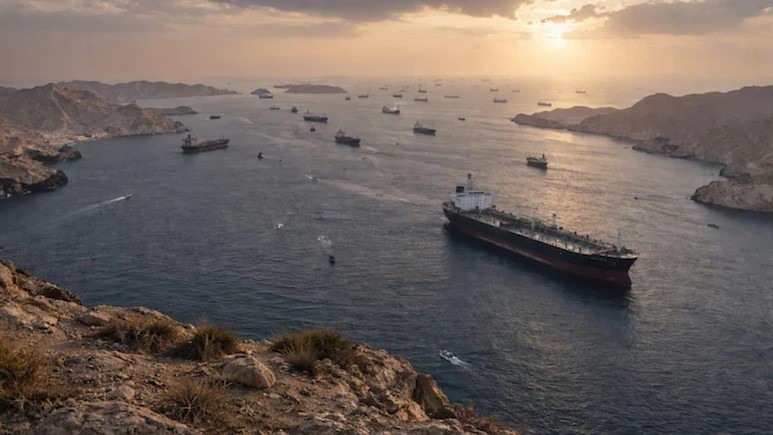
IRAN on Sunday declared the Strait of Hormuz closed "until further notice" after saying its Revolutionary Guard naval forces struck a vessel accused of compromising maritime security, sharply escalating tensions in the Gulf despite ongoing diplomatic efforts to prevent a wider conflict.
The Navy of Iran's Islamic Revolutionary Guard Corps (IRGC) said the vessel had switched off its tracking systems and travelled along an unauthorised route before being intercepted and brought to a halt. It added that several other ships had ignored warnings to alter their course, prompting Tehran to suspend passage through the strategic waterway.
The IRGC said the strait would remain closed until "the end of U.S. interference in this region" and warned that any further military action against Iran would trigger a "severe response", including strikes on what it described as new enemy bases in the region.
The closure comes as Oman continues to mediate between Tehran and Washington in an attempt to de-escalate hostilities. Iranian Foreign Minister Abbas Araqchi met Omani Foreign Minister Sayyid Badr Albusaidi in Muscat to discuss mechanisms for ensuring the safe passage of commercial vessels, with both sides agreeing to continue negotiations at the political and technical levels.
Reuters reported on Sunday that the United States has demanded that Iran publicly guarantee the safety of international shipping through the Strait of Hormuz and ensure unrestricted access to all maritime lanes without imposing transit charges.
The latest developments follow renewed fighting between Iran, the United States and Israel that has unsettled global energy markets. Roughly one-fifth of the world's oil supply normally passes through the Strait of Hormuz, and the effective blockade has driven crude prices sharply higher, intensifying concerns over inflation and disruptions to global supply chains.
Diplomatic efforts remain under way despite the deteriorating security situation. A senior Iranian source said Iran, the United States, Qatar and Pakistan had agreed to pursue further negotiations, while Oman continues to play a central mediating role.
Meanwhile, Iran's newly appointed Supreme Leader, Ayatollah Mojtaba Khamenei, pledged to avenge the killing of his predecessor, Ayatollah Ali Khamenei, declaring that Iran would pursue retribution regardless of future developments.
His remarks came as U.S. President Donald Trump warned that Washington was prepared to launch overwhelming military action should Iran attempt to target him. - July 12, 2026










