


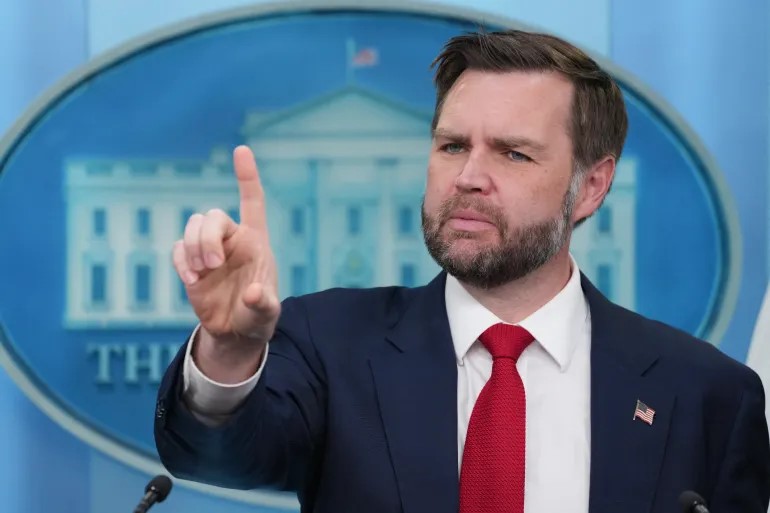
US Vice President JD Vance on Thursday rejected describing the seven-month conflict with Iran as a war and declined to give a timeline for its end, as renewed fighting with Tehran threatens to keep fuel prices elevated ahead of the US midterm elections.
His comments came after the United States and Iran exchanged attacks this week following a period of relative calm, with no diplomatic talks underway to end the conflict.
The fighting has dragged down President Donald Trump’s approval ratings and pushed up petrol prices, raising the political stakes for Republicans seeking to retain their narrow congressional majorities in November.
At a White House briefing, Vance said the United States had ended major combat operations with Iran despite the renewed hostilities, and said Washington’s immediate focus was preventing Tehran from continuing to disrupt commercial oil shipments through the Strait of Hormuz.
“I wouldn't call it a war,” Reuters quoted Vance saying. “Right now, there's no active shooting. I recognise there's been places where this has flared up.”
The United States maintains more than 50,000 troops in the Middle East, while the Trump administration has surged military assets into the region, including nearly 20 warships focused on a blockade.
Some US troops have remained in the region longer than expected, while others have been redeployed from Europe and the Indo-Pacific.
Asked repeatedly when the conflict would end, Vance said the outcome depended on Iran stopping attacks on commercial shipping.
“When will the Iranians stop shooting at ships? I think the reality is I don't know the answer to that question,” he said.
Vance also ruled out negotiations while Tehran continued targeting commercial shipping.
Although the most intense fighting has subsided, repeated exchanges of fire and the absence of a definitive end to the conflict have kept global oil prices elevated.
The United States launched airstrikes on Iran on Tuesday, hitting what it said were military targets along the coast in retaliation for Iranian attacks on shipping in the Strait of Hormuz.
The latest escalation has pushed oil prices to their highest levels since July, adding to concerns over the economic and political impact of the prolonged conflict. - September 4, 2026










