


AUSTRALIA’S new restrictions on international student migration will prevent most foreign students from bringing family members into the country but exempt those from ASEAN and Pacific nations, including Singapore, as the Labor government seeks to tighten migration controls.
The exemption reflects the government’s efforts to strengthen ties with regional neighbours, according to the International Education Association of Australia.
The long-awaited measures, announced by the ruling Labor Party on Sept 17, will also target international students who switch courses primarily to extend their stay, in a practice described by the government as “visa hopping”.
Home Affairs Minister Tony Burke said the reforms were aimed at ensuring Australia’s migration system better matched the country’s needs while maintaining support for immigration.
“Almost everyone who comes to Australia is a good guest in our country. These reforms are to ensure that our migration system can be better targeted to the current needs of Australia,” he said.
The government plans to reduce the overall migration intake from about 300,000 a year to 245,000 in the year from mid-2026 to mid-2027, followed by a further reduction to 225,000 in the subsequent 12 months.
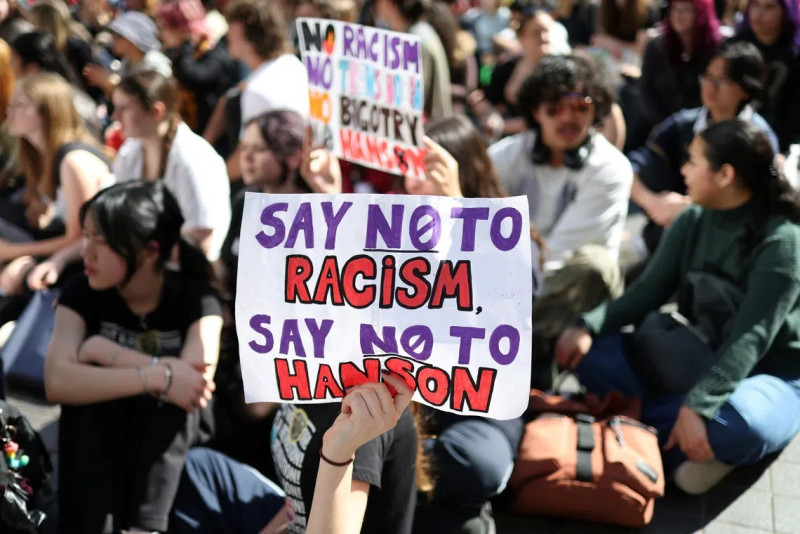
The measures come as Labor faces growing support for One Nation leader Pauline Hanson, whose party has called for significantly deeper cuts to migration.
One Nation announced on Sept 14 that it wanted to reduce annual migrant intake to 130,000 and cut the number of temporary visa holders, including international students and family members of skilled migrants, by 750,000 over three years. Australia currently has about three million temporary visa holders.
Burke rejected such a sharp reduction, saying excessive cuts would damage the economy.
He said the government supported immigration but opposed attempts to exploit the migration system.
The International Education Association of Australia chief executive Phil Honeywood said the exemption for ASEAN and Pacific students was linked to Australia’s broader regional strategy.
He described it as “part of the government’s regional strategic policy to provide supportive policy settings for our neighbours in the region”.
Karis Chua, a 21-year-old Singaporean studying law and business in Canberra since 2024, said she did not have dependants but welcomed the exemption for Singaporean students who did.
She said she understood the government’s need to control migration but felt sympathy for students from countries affected by the restrictions.
“I have a lot of respect for mature students who continue to study with their family,” she said. “I also understand where the government is coming from. Immigration has been the biggest topic in Australia for a long time.”
For students outside the ASEAN and Pacific regions, Honeywood said the family ban could create difficulties and discourage applicants with partners and children.
Liang Weihong, a Chinese student completing a PhD at Sydney University and president of the International Student Representative Council of Australia, said the restrictions risked making international students feel “unwelcome”.
“If a student comes here, they will be anxious and not know whether, if they fall in love with another student, they will get a visa after they leave,” he said. “If a student is here, they should think of Australia as a welcoming place where they are part of the country and are good for the country’s cohesion.”
There will be limited additional exemptions from the family restrictions, including for students undertaking PhD programmes.
Australia granted 337,427 student visas in the first half of 2026, including 45,991 for dependants or family members.
The government will also tighten rules on course changes, allowing students to switch courses only where the new programme adds to their existing qualification, such as moving from an undergraduate course to a graduate degree.
Opinion surveys indicate growing public support for restricting migrant numbers, amid concerns over pressure on housing and public services.
A Sydney Morning Herald survey published on Sept 14 found that 31% of voters supported One Nation’s approach to migration, compared with 24% for Labor’s approach and 19% for the Liberal-National Coalition, which wants to reduce annual migration to below 200,000. The remaining 26% supported other approaches or were undecided. - September 18, 2026










