


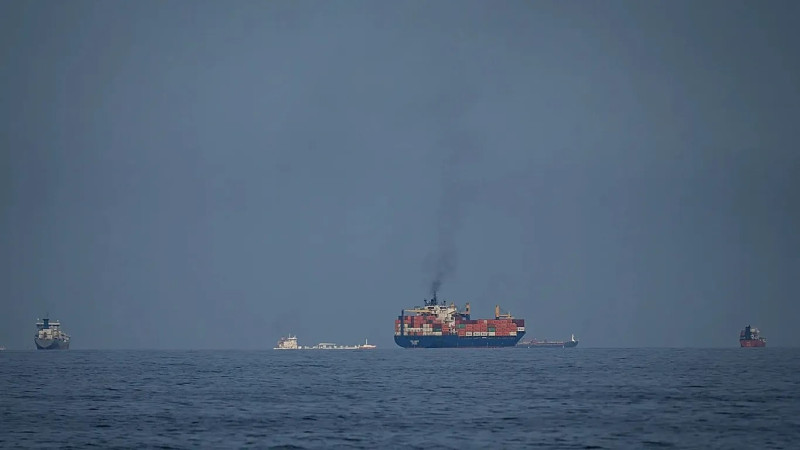
ATTACKS on vessels in and around the Strait of Hormuz have reached their highest weekly level since the United States-Israel war with Iran began, while oil shipments through the strategic waterway have slowed again, according to maritime and industry data.
BBC Verify’s analysis of data from the United Kingdom Maritime Trade Operations (UKMTO) found that 12 vessels reported attacks between Oct 5 and 11, surpassing the 10 incidents recorded in the preceding week.
UKMTO said six vessels were attacked on Sunday, the highest number reported in a single day, with four more attacks recorded so far this week.
The rise in attacks comes as the recovery in oil shipments through the strait has lost momentum. Data from trade intelligence firm Kpler showed that about 12.6 million barrels of oil a day passed through the waterway on Oct 13, down from 15 million barrels a day at the end of September.
Analysts said Tehran was targeting vessels to strengthen its control over the shipping route, as US forces increased the number of tankers escorted through the southern part of the strait to protect them against Iranian attacks.
Iran has also widened its attacks to vessels near the coastlines of Gulf Arab states and in the Gulf of Oman, they said.
The escalation comes as US Navy data showed that the number of vessels assisted through the Strait of Hormuz during the first 10 days of October rose 85 per cent compared with the same period in August.
Recent oil shipments from Gulf Arab states have increasingly relied on a shuttle system, in which groups of tankers load crude and pass through the strait before transferring their cargo to larger tankers in the Gulf of Oman.
The shuttle tankers use a route close to Oman’s coast. However, Iran considers that route unauthorised and has directed vessels to use an alternative passage closer to its own coastline.
Orbital Risk Intelligence chief executive Martin Kelly said Iran was changing its strategy in response to its reduced control over the strait, launching attacks almost daily and sometimes several times a day. - October 17, 2026










