


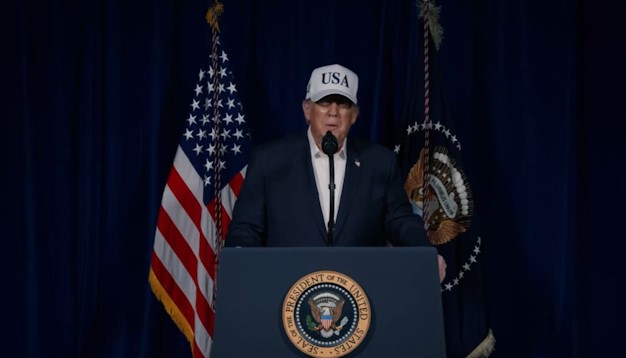
US President Donald Trump is weighing whether to escalate military action against Iran or pursue a negotiated settlement after his Republican Party suffered major losses in the midterm elections, with rising fuel prices and public opposition to the eight-month-old conflict emerging as significant political liabilities.
Trump has repeatedly threatened to resume full-scale bombardment of Iran if Tehran fails to agree to terms acceptable to Washington, but the Democrats' sweeping electoral victory has raised fresh questions over the political and economic consequences of prolonging the conflict.
In his first remarks following Tuesday's election, Trump acknowledged that the war had contributed to the Republican losses, particularly through its impact on fuel prices, but maintained that launching the military campaign was the right decision.
"It's largely true because it drove gasoline up a little bit," he said, referring to Vice-President JD Vance's assessment that the conflict had become a political liability for the Republicans.
"At the same time, if I had to do it again, I'd do it again," AP cited Trump adding.
The conflict has caused tens of billions of dollars in damage across the region and disrupted global energy markets, pushing up fuel prices and costs for households and businesses.
Despite the possibility of renewed US military action, analysts say Trump faces several options, including maintaining the current military posture, targeting Iran's underground nuclear facilities or launching broader attacks on Iranian infrastructure.
One possible target is Pickaxe Mountain, an underground facility in central Iran linked to its nuclear programme. Targeting the site could allow Trump to claim that Washington had sufficiently damaged Iran's nuclear capabilities before pursuing negotiations.
Former assistant secretary of state for Near Eastern affairs David Schenker said Washington could seek an agreement restoring freedom of navigation through the Strait of Hormuz, providing Iran with some sanctions relief and postponing further nuclear negotiations.
However, broader military escalation could worsen the energy price pressures that have become a major concern among American voters.
Brent crude fell below US$95 a barrel on Wednesday, reaching its lowest level in two months as markets weighed the prospects of a negotiated settlement.
The conflict has also expanded beyond the Gulf, with Iran-backed Houthi rebels and a Saudi Arabia-led coalition involved in escalating hostilities around the Red Sea and Yemen.
The Houthis have attacked areas under the control of Yemen's internationally recognised government and targeted Saudi infrastructure, worsening an already severe humanitarian crisis.
Regional officials are closely monitoring Washington's next move, particularly after Israeli Prime Minister Benjamin Netanyahu reportedly urged Trump during a weekend telephone conversation to resume strikes against Iran.
Three Middle Eastern government officials said the Trump administration had previously signalled through diplomatic channels that Tehran's negotiating leverage would diminish after the US elections.
However, another regional official said the election results had given mediators greater optimism about finding a diplomatic pathway to end the conflict.
Vance, meanwhile, appeared more direct than Trump in attributing the Republican electoral setback to the war.
"The reason we lost," he said in a social media post, "is the war."
Voter survey findings also highlighted the extent of public dissatisfaction, although the conflict was not the dominant issue for most Americans.
About six in 10 voters said the United States had made the wrong decision in taking military action against Iran, according to the AP Voter Poll, which surveyed more than 100,000 voters.
Only about one-third considered the war crucial to their congressional voting decisions, compared with roughly half who identified the cost of living or government corruption as major factors.
Meanwhile, around six in 10 voters said they were very concerned about petrol and diesel prices, with approximately two-thirds of those voters supporting Democratic candidates in their local House races.
Democratic candidates who secured electoral victories also highlighted the financial pressures facing households, linking the conflict to higher fuel costs and difficulties meeting everyday expenses.
Senator-elect Josh Turek of Iowa said voters had repeatedly raised concerns about struggling to afford food, housing, electricity and petrol.
Despite the electoral setback, Trump insisted he would not change his approach to Iran.
"I can tell you that as far as that war is concerned I would have done nothing different," he said. - November 5, 2026










