BRUSSELS – EU leaders will grapple today with the threat of new coronavirus variants whose spread risks outpacing the hope that vaccines will put a quickish end to the pandemic in Europe.
The chiefs will hold a summit – by videolink to protect themselves from infection – "to raise political awareness on the seriousness of the situation with the new variants", an EU official said.
Virus mutations that emerged in Britain, South Africa and Brazil have alarmed EU authorities because of their increased infectivity, prompting bans or restrictions on travellers from those countries.
Yet, as those variants are currently a tiny proportion of overall cases in the EU, leaders see it as a race between getting enough jabs into arms before the mutants dominate.
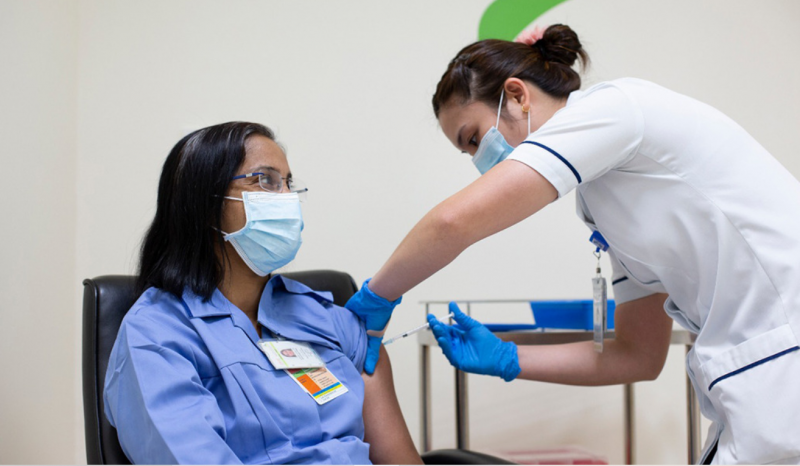
European Commission chief Ursula von der Leyen said the bloc will soon expand vaccines beyond the Pfizer-BioNTech and Moderna ones currently authorised to inoculate 70% of adults in the EU by the "end of summer" – meaning the end of August.
"This is doable, it is ambitious, but we have to be ambitious – people are waiting for that," she said yesterday.
At the same time, the EU heads of state and government must manage expectations in a European population of 450 million.
The vaccination roll-out across the European Union has been disappointingly slow compared with the US, Israel and other countries, a problem compounded by delivery shortfalls of the Pfizer-BioNTech doses.
There is also a minority, particularly in countries such as France, who hesitate to be inoculated.
And, while many hope the jabs will soon put an end to limited travel, tests, nighttime curfews and home quarantines, EU officials and diplomats warn against Europe lowering its guard too early.
Already, the EU recorded 297,500 more deaths between March and October 2020 compared with the same period in the preceding three years, according to the Eurostat statistics office.
Data from the latest wave that peaked in November-December has not yet been compiled.
While there was no indication as yet the new variants are more deadly, there were concerns they could infect more people and overload hospital intensive care capacity.
Talk of vaccine certificates
The increase in cases of the British variant in particular means "we might have to take further measures temporarily restricting the freedom of movement inside the EU", said one EU diplomat.
And the idea of using vaccine certificates as a form of travel passport in Europe, as championed by tourism-dependent Greece, is only in its early stages of discussion.
"We are willing to look into this certificate discussion, but I think there are still many, many, many questions to be answered. First of all, we don't know if people who have been infected can still be contagious and can still infect other people," the EU diplomat said.
EU officials added that any move in that direction needed a large proportion of people to first be vaccinated so Europe does not become divided between a small minority able to travel and eat out while the rest remained confined.
The summit was to talk about ensuring that vaccination certificates are recognised across all EU countries, and also about moves to have antigen tests that are cheaper and less invasive – but less reliable – than PCR swabs mutually accepted.
In the meantime, the EU will have to ramp up genome analysis of virus samples to detect the spread of the new variants.
An overriding goal for the leaders in the summit is to guarantee the continued operation of the passport-free Schengen zone, even with the added restrictions.
That would call for a harmonisation of rules requiring negative Covid-19 tests before boarding intra-EU flights and common quarantine standards on duration and excepted categories of travellers. – AFP, January 21, 2021