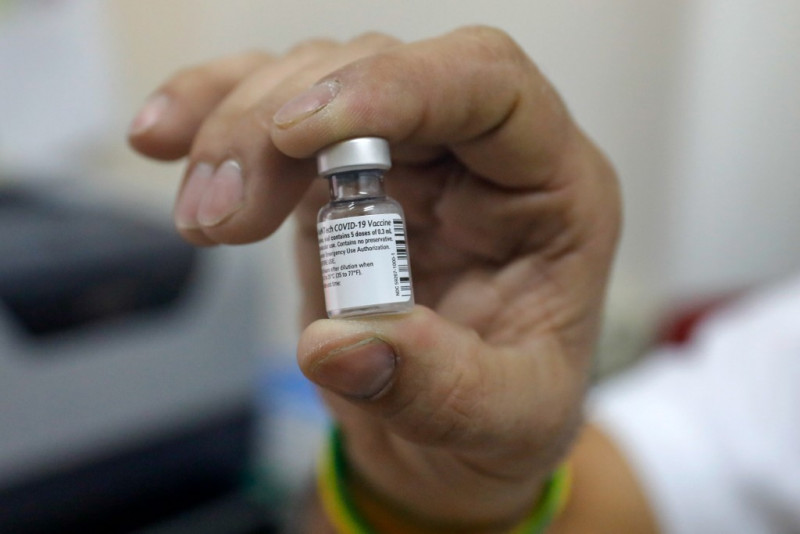
JOHANNESBURG – South Africa has secured 20 million doses of the Pfizer-BioNTech coronavirus vaccine, the Health Ministry said yesterday.
Africa’s worst virus-hit country has yet to begin vaccinating its population against Covid-19, stirring criticism over slow procurement and lack of strategy.
A first shipment of AstraZeneca-Oxford jabs produced in India is due to arrive today, with injections expected to start two weeks later.
Health Minister Zweli Mkhize told The Sunday Times newspaper that 20 million additional vaccines had been ordered from US drugmaker Pfizer.
“These vaccines are secured and awaiting manufacturers to submit final agreements with details of delivery dates and exact amounts,” said Mkhize, quoted in an article yesterday.
Health Ministry spokesman Lwazi Manzi later confirmed the information via WhatsApp.
The new Pfizer order will complement 12 million vaccine doses from the WHO-backed Covax facility, nine million Johnson & Johnson shots and 1.5 million AstraZeneca/Oxford vaccines – pushing the total supply secured so far to over 40 million.
Further allocations from the African Union (AU) are yet to be announced, said Manzi.
South Africa aims to vaccinate 67% of the population, or 40 million people, by the end of the year.
Some vaccines will be provided by Covax and the AU, while others will be directly purchased from suppliers.
“We are reasonably comfortable that what we have paid for, signed for and are negotiating for will cover the numbers that we are looking to vaccinate,” Mkhize assured.
The minister added that storage of the Pfizer-BioNTech vaccine, which needs to be kept at -70 degrees Celsius, would not be an issue.
“We have some capacity, mostly in academic institutions. There are now companies coming forward with storage and transit solutions,” he said.
South Africa's coronavirus outbreak has been accelerated by a new variant thought to be more contagious than earlier forms and relatively more resistant to existing vaccines.
To date the country has recorded more than 1.4 million infections and almost 45,000 deaths. – AFP, February 1, 2021