


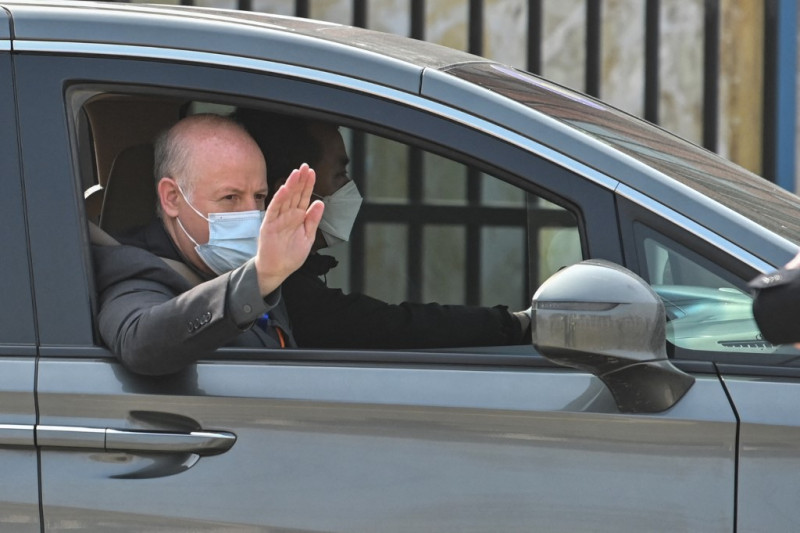
WUHAN – A member of the World Health Organisation (WHO) mission to China exploring the origins of the coronavirus pandemic took a swipe today at US intelligence services on the issue, after the State Department cast doubt on the transparency of their probe.
President Joe Biden “has to look tough on China”, expert Peter Daszak said in a tweet as the mission ended, adding: “Please don’t rely too much on US intel: increasingly disengaged under Trump & frankly wrong on many aspects.”
The WHO mission to China ended without finding the source of the coronavirus that has killed more than 2.3 million worldwide.
The experts had to walk a diplomatic tightrope, with the United States urging a “robust” probe before they left and China warning against the politicisation of the issue.
As they wrapped up the mission team member Daszak tweeted that they worked “flat out under the most politically charged environment possible.”
Later he issued the extraordinary tweet referencing Biden, wading directly into the soupy geopolitics which covers the origins of the pandemic.
Dasak’s comments were linked to an article referencing US State Department comments that cast doubt over the transparency of China’s cooperation with the WHO mission.
Beijing is desperate to defang criticism of its handling of the chaotic early stages of the outbreak. Former US president Donald Trump frequently laid the blame with China and repeated a controversial theory that a lab leak may have been the source of the pandemic.
The WHO team also concluded the theory of a lab experiment gone wrong was “extremely unlikely”, while introducing new avenues of inquiry, chiming with China’s view that it may have originated overseas or been spread by frozen foods.
Despite failing to find the virus’ origins, a year after the pandemic began, the team of foreign experts did agree the virus likely jumped from bats to an unknown animal species before transmitting to humans. – AFP, February 10, 2021
















