


BEIJING – China’s migrant workers face a difficult choice this Lunar New Year holiday: long journeys home fraught with coronavirus restrictions, or financial incentives enticing them to stay put.
Normally, the festival period starts with the world’s biggest annual human migration as hundreds of millions of China’s workers undertake a pilgrimage back home from industrial zones and big cities.
This year, the government is walking a tightrope between controlling the pandemic and boosting the economy.
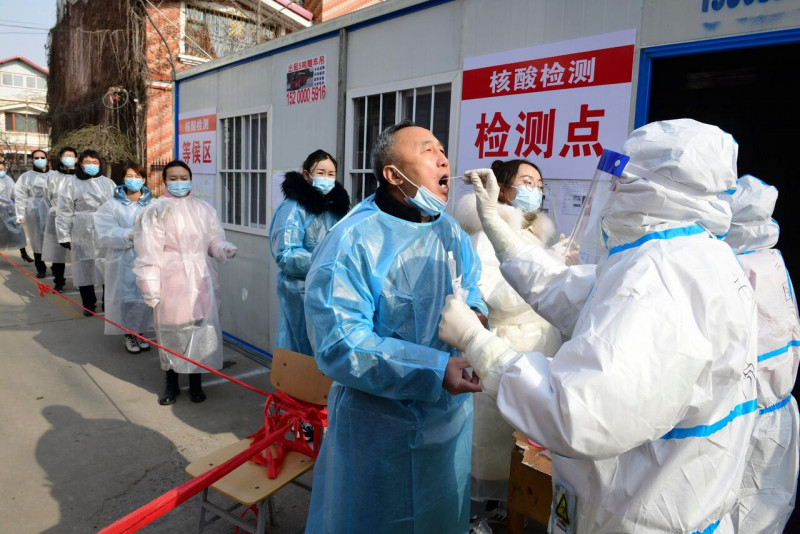
Carrot-and-stick tactics are being used to encourage workers not to travel, including offers of free phone data and online films, versus requirements for virus tests and quarantine.
“To go home, I need to do a nucleic acid test and get a certificate, which is very inconvenient,” said Hou Sibai, a Gansu native working as a delivery driver here.
By contrast, some 40 million yuan (RM25 million) in coupons is being given out to residents in the capital who “answer the government’s call to stay put”, reported state media.
The incentives appear to be working.
Trips taken on January 28 – the first day of the official, 40-day peak travel period – plummeted 74% on last year, said state broadcaster CCTV.
Beijing’s transport committee said air and rail travel was down more than 80%, while road traffic dropped by nearly a third.
Train stations across the city were emptier than usual for this time of year, with rows of empty seats on the concourse and no queues at the ticket machines.
Returning home
In the days before the holiday, China’s domestic Covid-19 cases dropped to zero, giving some travellers more confidence.
Li Xinjun, a 50-year-old housekeeper, was heading to Hebei to see her son and his family.
“Because of the epidemic (last year), I didn’t take a break,” she told AFP from outside Beijing Railway Station. “My clients work in the hospital and because of the epidemic, they didn’t take leave, so I didn’t go home either.”
“I haven’t been home to see my children for a long time.”
A recorded message at the station reminded travellers to lower face masks for a facial recognition check on their way in, and to keep 1m apart.
One man, who only gave his surname Liu, told AFP he decided to see his elderly parents in northern Shanxi province, but the rules mean they can’t gather with any other relatives.
Another traveller, Liu Wenjing, told AFP she was returning home to central Henan province because of pressure from her family.
“They have been pushing me to go home so much that I decided to make the trip back,” said the 24-year-old, who thinks her parents are keen to introduce her to potential boyfriends in their home town.
“I’m not in a rush (to get married), but my parents are.”
She needs a negative coronavirus test to leave Beijing, she said, and will take another test upon her return, with the possibility of having to home quarantine.
Muted celebrations
Restrictions vary across the country, with some rural areas warning they might make outsiders quarantine, while other are closing to visitors.
Some of the tightest restrictions are in Beijing.
Those entering the capital need a negative test before travel, then more tests seven and fourteen days after arriving – alongside two weeks of “health monitoring”.
Hou Sibai, the delivery driver, told AFP that all the hassle involved means he will forgo visiting his home town for the second year in a row.
Even without coronavirus restrictions, the journey would have been laborious, entailing a 16-hour train ride to Tianshui in northwestern Gansu, followed by an hour’s drive to his village.
“My relatives, friends, my parents and siblings are all there,” Hou said sadly, adding that he believed he could be forced to do home quarantine, too.
“To come back to Beijing, I would also need to do another nucleic acid test.”
Many of Hou’s colleagues have also decided to stay put for the long holiday, he said.
He lives in one room of a shared flat with his wife and daughter in northeastern Beijing, where they will mark the upcoming festivities modestly.
“The three of us might make something tasty to eat,” Hou said.
“It’s not as lively as in my home town, but I still want to have a good Lunar New Year celebration in Beijing.” – AFP, February 11, 2021
















