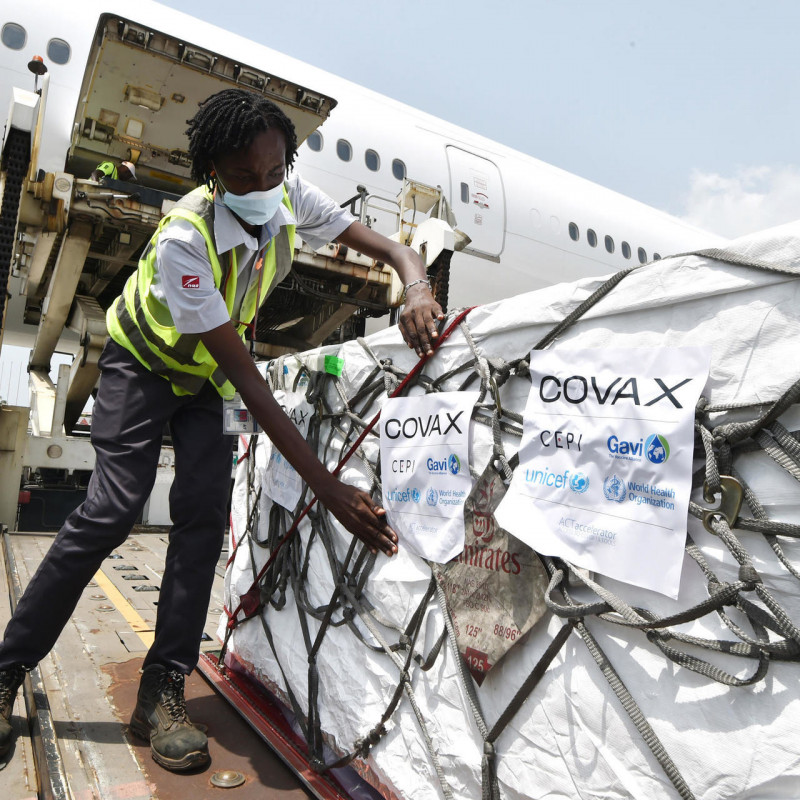
GENEVA – Covax will distribute 14.4 million Covid-19 vaccine doses to 31 more countries next week, the WHO said yesterday as it warned people not to waste, through complacency, the hope that vaccines bring.
The Covax global vaccine-sharing facility shipped more than 20 million doses to 20 countries as the scheme aimed at ensuring poorer nations get access to jabs took off this week.
But the World Health Organisation voiced fears that further waves of the coronavirus pandemic could be on the way if people think the roll-out of vaccines around the globe means the crisis is over.
“The arrival of vaccine is a moment of great hope. But it potentially also is a moment where we lose concentration,” WHO emergencies director Michael Ryan told a press conference.
“I really am very concerned that... we think we’re through this. We’re not.
“And countries are going to lurch back into third and fourth surges if we’re not careful.
“We should not waste the hope that vaccines bring... by dropping our guard in other areas.”
WHO director-general Tedros Adhanom Ghebreyesus praised the first full week of the Covax roll-out, but said wealthy countries are nonetheless still leaving others behind in the vaccination rush.
Within Africa, Angola, the DR Congo, The Gambia, Ghana, Ivory Coast, Kenya, Lesotho, Malawi, Mali, Nigeria, Rwanda, Senegal, Sudan and Uganda have now received their first doses through Covax.
Elsewhere, Cambodia, Colombia, India, Moldova, the Philippines and South Korea have also taken deliveries.
‘Mass trauma’
“In the next week, Covax will deliver 14.4 million doses to a further 31 countries. That brings the total number of countries to 51,” said Tedros.
“This is encouraging progress, but the volume of doses being distributed through Covax is still relatively small.”
He said the first round of allocations, running until the end of May, only covered between 2% and 3% of the population in recipient states, “even as other countries make rapid progress towards vaccinating their entire population within the next few months”.
He called for vaccine production to be urgently ramped up, including through linking manufacturers with rival companies that have spare capacity.
Tedros also said the planet would be feeling the mental scars from the pandemic for years to come and said the scale of its impact would be worse than during the recovery from World War II.
“The whole world is affected. Each and every individual. That means mass trauma that is beyond proportion. Even bigger than what the world experienced after the Second World War,” he said.
“And, when there is mass trauma, it affects communities for many years to come.”
“Countries have to see it as such and prepare for that.
“Mass, mass trauma.”
Brazil fears
Meanwhile, Tedros voiced alarm about the coronavirus situation in Brazil, where cases and deaths have shot up, bucking the global trend.
He said that in the week beginning November 2, there were 114,000 new cases in Brazil – a figure that hit 374,000 in the week of February 22.
Tedros said the number of deaths had also shot up from 2,500 to 8,000 over the same time period.
“The situation is very serious and we’re very concerned, and the public health measures that Brazil takes should be aggressive while also rolling out vaccines,” he said.
“Brazil has to take this very, very seriously.”
He said that because Brazil bordered so many other countries, the situation there threatened the entire South American continent.
Ryan said the P1 variant – which has now been found in 29 countries – had become dominant in Brazil, adding to its woes.
He said basic public health measures were still the “best bet” in trying to control case numbers.
“Our risk, to an extent, is still in our hands,” Ryan said.
But he added that it was very hard in countries like Brazil with large urban populations to take measures like physical distancing and mask-wearing “where they don’t have the resources to do that without the support of the state”. – AFP, March 6, 2021