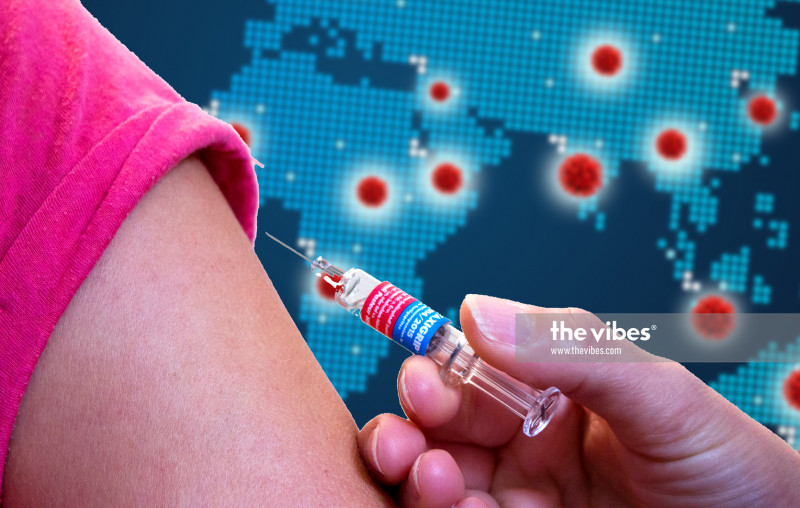
PARIS – Some 170 former country leaders and Nobel Prize laureates have called on the United States to waive intellectual property rules for Covid-19 vaccines to give poorer countries faster access to inoculations.
In an open letter to President Joe Biden published late yesterday, the group said it is “gravely concerned by the very slow progress” in scaling up global vaccine access and immunisation in low- and middle-income nations.
While the vaccine roll-out in the US and many wealthier countries is bringing hope to their citizens, “for the majority of the world, that same hope is yet to be seen”, said the signatories, who include Nobel winners Muhammad Yunus, Joseph Stiglitz and Mohamed ElBaradei, and former world leaders such as Mikhail Gorbachev, Francois Hollande and Gordon Brown.
The group said it is “encouraged” that the Biden administration is considering a temporary waiver of World Trade Organisation intellectual property rules during the Covid-19 pandemic, as proposed by South Africa and India.
Such a waiver will be “a vital and necessary step to bringing an end to this pandemic”, as it will expand global manufacturing capacity, “unhindered by industry monopolies that are driving the dire supply shortages blocking vaccine access”.
Full protection of intellectual property and monopolies will negatively impact efforts to vaccinate the world and be self-defeating for the US, said the group in the letter coordinated by the People’s Vaccine Alliance, which brings together organisations and activists campaigning for an end to property rights and patents for vaccines.
“Were the virus left to roam the world, and even if vaccinated, people in the US would continue to be exposed to new viral variants.”
The letter comes days after the World Health Organisation (WHO) condemned the scarcity of coronavirus vaccine doses available for poorer nations.
“There remains a shocking imbalance in the global distribution of vaccines,” said WHO chief Tedros Adhanom Ghebreyesus last Friday.
By then, more than 732 million doses of vaccines had been administered in at least 195 territories around the world, according to an AFP count.
Some 49% of the doses were injected in high-income countries accounting for 16% of the global population. – AFP, April 15, 2021