World

School closures lead to 2.4% dip in students’ expected annual wages: ADB

It adds up to estimated U$1.25 tril, or 5.4% of developing Asia’s 2020 GDP

Updated 5 years ago · Published on

School closures lead to 2.4% dip in students’ expected annual wages: ADB
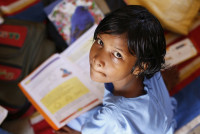
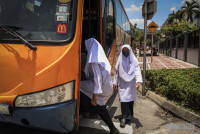
Learning and earning losses will rise the longer schools stay shut due to Covid-19, says the Asian Development Bank. – The Vibes file pic, April 28, 2021

KUALA LUMPUR – Students affected by school closures in developing Asia stand to lose an average of US$180 (RM738), representing a 2.4% decline, in expected annual earnings, said the Asian Development Bank (ADB).

The present value of these future earning losses adds up to an estimated U$1.25 trillion, equivalent to 5.4% of the region’s gross domestic product in 2020, said the bank in its flagship economic publication Asian Development Outlook for this year.

“In a more optimistic scenario, for the effectiveness of remote learning during the Covid-19 pandemic, total losses are equivalent to U$0.8 trillion (3.6% of 2020 GDP).

“But, a pessimistic scenario puts the losses at U$1.8 trillion (7.6% of GDP).”

Learning and earning losses will rise the longer schools stay shut, it said.

Given that learning losses will substantially reduce future productivity and earnings, ADB suggested that governments adopt policies to mitigate the potential damage and ensure education systems emerge from the pandemic better than they were before.

It said schools have been closed in varying degrees across developing Asia, with a quarter of the region’s economies seeing closures for 200 to 300 days, and a year or more in a fifth.

Only a handful of economies managed to keep schools open continuously, said ADB, adding that remote learning strategies were deployed in most economies.

“But, many students are constrained by (a lack of) access to resources like computers and the internet. This has limited their ability to learn from home.”

Overall, students in developing Asia have lost 29% of a year of learning on average.

In South Asia, where closures have been longest, students lost more than half a year of education, while those in East Asia lost 39%, Southeast Asia (35%) and Central Asia (24%).

Schools have mostly stayed open in the Pacific, where learning losses are relatively low (8.0%). – Bernama, April 28, 2021

Related News

Malaysia / 3w

Attractive salaries, commissions help drive growth of scam centres in Malaysia

Education / 1mth

Haze: Schools in Johor to reopen this Monday

Education / 1mth

Education Department investigates allegations of students serving alcoholic beverages

Community / 1mth

Penang: Ratepayers Association calls for immediate solution to worsening congestion

Opinion / 1mth

When children learn to exclude, adults must ask why

Education / 1mth

Fadhlina: Numerous factors considered before any decision made to close schools

Spotlight

Malaysia

Anwar receives special recognition as 10,000 Muslims gather in Putrajaya

Malaysia

Video of elderly man being assaulted goes viral on social media

Malaysia

The wide reach of corruption and organised crime in the country

Malaysia

Malaysia pushes to give smaller economies stronger voice in Asia-Pacific trade – Anwar

Malaysia

No tsunami threat to Malaysia after 5.4-magnitude earthquake hits Banda Sea

Malaysia

Who is calling the shots in Negeri Sembilan as Ismail’s position comes under scrutiny?

Opinion

Ayob Khan: When the uniform comes off, the principles remain

Malaysia

MySiren to send emergency alerts to compatible phones nationwide from Nov 29 test

You may be interested

World

US attorney-general declines to confirm whether Nvidia CEO was investigated

World

Trump backs Jensen Huang's return as Nvidia CEO amid national security scrutiny

World

US weighs new tariffs on 16 trading partners, Malaysia faces 19% rate cap

World

UN climate talks collapse as EU rejects ‘weak’ COP31 deal