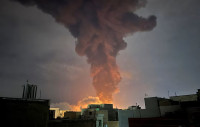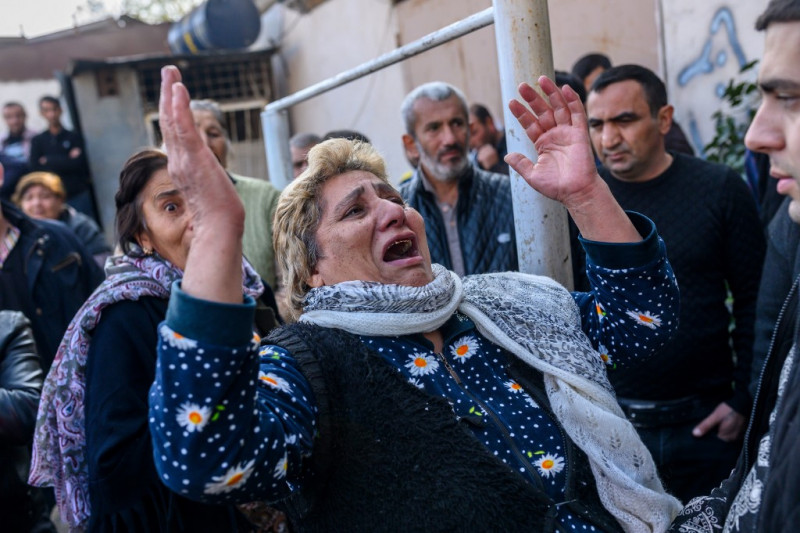
STEPANAKERT – Armenian and Azerbaijani forces were engaged in new clashes overnight and today morning, AFP correspondents said, as the two sides accused each other of violating a Russian-brokered ceasefire over the Nagorno-Karabakh region.
An AFP correspondent in the Azerbaijani town of Barda not far from the front line heard thumping echoes of shelling today morning.
In Karabakh's main city of Stepanakert, an AFP photographer heard the sounds of shelling from the direction of the town of Hadrut.
The worst fighting in almost three decades erupted last month over Nagorno-Karabakh, a breakaway region of Azerbaijan controlled by Armenians since a 1990s war but which is not recognised by any state.
The Azerbaijani defence ministry accused Armenian forces of not complying with a ceasefire agreement negotiated in marathon talks in Moscow last week overseen by Russia.
"Armenian armed forces, which did not comply with the humanitarian truce, repeatedly tried to attack the positions of the Azerbaijan army," the ministry said.
It said it had destroyed a "large number of enemy forces" as well as one T-72 tank and three Grad multiple rocket launchers.
Armenian defence ministry spokeswoman Shushan Stepanyan said for her part that Azerbaijan was "now intensively shelling the southern front".
Armenia claimed that "the adversary suffered great losses of manpower and military equipment" but did not provide further details.
After 11 hours of talks between the Armenian and Azerbaijani foreign ministers in Moscow, the arch enemies agreed early Saturday to a humanitarian ceasefire. But the truce has not held.
Both sides have exhanged accusations of intensive shelling of civilian areas and escalating two weeks of fierce clashes.
The 1990s war – which ended with a 1994 ceasefire that did not present a long-term solution to the conflict – resulted in the deaths of some 30,000 people.
Nearly 500 people including more than 60 civilians, have been killed in the latest fighting since last month, according to a tally based on tolls given by both sides. – AFP, October 12, 2020