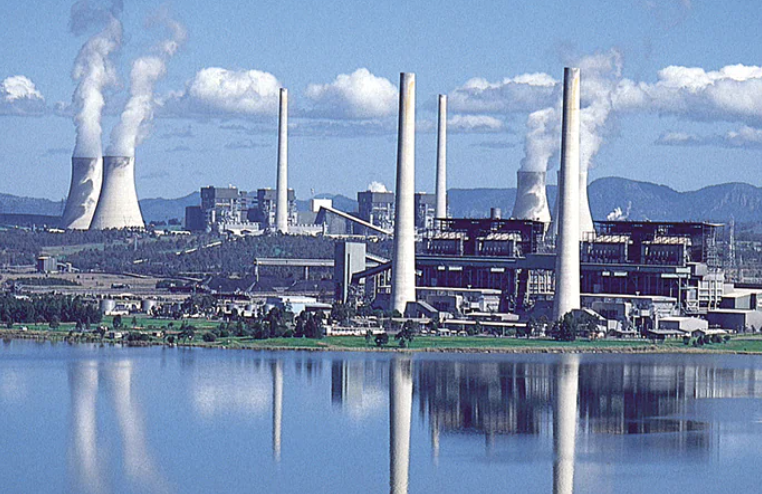
SYDNEY – Australia’s oldest coal-fired power plant was shuttered today, as the country – a once-notorious climate straggler – prepares for a seismic shift towards renewable energy.
The Liddell power station, a three-hour drive north of Sydney, was one in a series of ageing coal-fired plants slated to close in the coming years.
Built in 1971, Liddell provided about 10% of the electricity used in New South Wales, Australia’s most populous state.
Liddell’s owner AGL said it would take about two years to demolish the hulking facility, which would free up the site for new clean energy projects such as a hydrogen power plant.
“More than 90% of the materials in the power station will be recycled, including 70,000 tonnes of steel – which is more steel than there is in the Sydney Harbour Bridge,” the company said.
For decades, coal has provided the bulk of Australia’s electricity, but University of New South Wales renewable energy expert Mark Diesendorf said that stations such as Liddell were fast becoming unreliable “clunkers”.
Besides being inefficient, highly polluting and expensive to repair, the continued widespread use of coal-fired power plants would make Australia’s climate targets almost impossible to meet.
Australia has long been one of the world’s largest coal producers and exporters, and a series of governments have resisted pressure to scale back the industry.
But the centre-left Labor Party elected last year on the promise of climate action has pledged that 82% of the country's electricity will come from renewable sources by 2030.
This demands a drastic overhaul – while world leaders such as Norway produce more than 90% of their power through renewables, Australia currently sits around 30%.
“The plans are for a fairly rapid phase-out,” Diesendorf said.
“These stations are overdue for retirement and there’s no economic argument for replacing them with new coal.”
‘Right direction’
Under growing public pressure to address the climate crisis, many Australian fossil fuel companies increasingly prefer to shutter old coal plants rather than keep them online.
Australia’s largest coal-fired power station, the Eraring facility in New South Wales, is scheduled to close in 2025 and a handful more will follow over the next decade.
While these closures will test whether renewables are ready to fill the gap, a government report released Friday indicated Australia was heading in the right direction.
The Australian Energy Market Operator found that record levels of renewable electricity – mostly solar power – were already driving down both emissions and household power prices.
Drenched in sunshine and blessed with sparsely-populated windswept coasts, Australia has the natural ingredients to be a renewable energy superpower, climate finance expert Tim Buckley said.
“Every bloody week there’s a new battery announced, or a new wind farm, or other major projects proceeding,” he said.
The tricky part, he added, would be figuring out how to store this energy and pump it across the vast distances between Australian towns and cities.
“We are talking about projects that haven't been attempted in Australia for decades, where labour shortages are real and engineering problems are to be expected.
“The chance of everything going smoothly between now and 2030 is close to zero.”
Even if it does go smoothly, Australia still faces enormous challenges in meeting its target of reaching net zero emissions by 2050.
‘Terrible laggard’
Over the past decade, an ideological brawl dubbed the “climate wars” has dominated Australian politics, repeatedly undermining attempts to reduce carbon emissions.
Researchers in 2020 found that 8% of Australians were in climate change denial, more than double the global average.
And although Australia is planning to clean up its domestic energy market, the economy is still fuelled by exports of coal and gas.
Dozens of new coal mines, oil fields and gas projects are in government planning pipelines.
“In terms of still developing gas and coal mines for export, we are a terrible laggard,” Diesendorf said. “It’s a real contradiction.” – AFP, April 28, 2023