


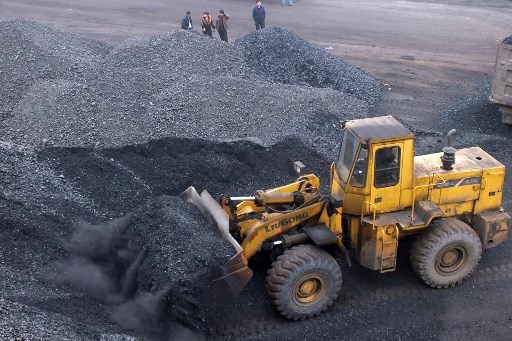
BEIJING – China’s plan to fund dozens of foreign coal plants from Zimbabwe to Indonesia is set to produce more emissions than major developed nations, threatening global efforts to fight climate change, environmentalists have warned.
Under the Paris climate deal signed in 2015, China positioned itself as a leader on climate change, and in September President Xi Jinping pledged the country would become carbon neutral by 2060.
But Chinese state-owned firms are investing billions in coal power abroad, which are not counted in the domestic carbon neutral calculations, and which environmentalists say put at risk the Paris accord’s goal of keeping global warming to well below 2 degrees Celsius.
“New plants that would potentially be operating for many years beyond 2030 are fundamentally incompatible with global efforts to contain climate change,” said Christine Shearer, head of coal research at the Global Energy Monitor.
The new carbon-belching power stations already under construction will produce 19GW of power and emit 115 million tonnes each year, data from Boston University’s Global Development Policy Center showed.
China has nearly three-times more in the pipeline abroad, meaning its overseas plants would emit more than the current emissions of major economies such as Britain, Turkey and Italy, according to figures in British Petroleum's annual review of global energy.
Each of the dozens of plants are expected to have a lifespan of decades.
If completed and operated for 30 years, these plants would emit the equivalent of almost three years of emissions from all coal-fired power plants in China, according to Lauri Myllyvirta, lead Asia analyst with Helsinki-based Centre for Research on Energy and Clean Air.
China is making the overseas coal play as part of its trillion dollar Belt and Road Initiative, a plan to fund infrastructure projects and increase its sway overseas.
Xi has promised to “pursue open, green and clean cooperation” under the Belt and Road plan, yet Chinese banks have continued their financing of coal projects regardless.
Between 2000 and 2018, 23.1% of the US$251 billion (RM1.01 trillion) invested by China's two biggest policy banks on overseas energy projects was spent on coal projects, according to Boston University’s database on China’s global energy financing.
The foreign plants the Chinese firms are currently building include the US$3 billion (RM 12.9 billion) Sengwa power plant in Zimbabwe -- one of the largest in Africa.
There are also at least eight projects in Pakistan, including a US$2 billion (RM8.3 billion) plant in the restive region of Balochistan.
The new projects are all in countries that have signed up to the Belt and Road plan, locking them into a coal-consuming energy future.
The flood of coal cash is “hampering efforts by developing nations to switch to cleaner alternatives,” said Li Shuo from Greenpeace China, and that risks “derailing the Paris accord”.
At home, China has about 96 billion tonnes of untapped coal reserves – the fourth-largest in the world.
The surplus has pushed Chinese power companies into energy hungry nations in South and Southeast Asia, Africa and Latin America.
“It is a way to provide markets for companies and services that the country itself increasingly does not need,” said Lauri Myllyvirta, China analyst at the Centre for Research on Energy and Clean Air (CREA).
However there are some glimmers of hope.
China’s environment ministry last month commissioned a report evaluating the environmental impact of China’s Belt and Road plan, which proposed a colour-coded classification of Beijing’s projects abroad.
If implemented, it would require more stringent financing of coal power plants, which would be flagged as red under the system to signal the potential for irreversible environmental damage.
Several countries subject to Chinese investment in coal plants have also moved to close projects in recent years.
Kenya, Egypt and Bangladesh have all nixed or announced plans to cancel new coal plants due to environmental or economic concerns.
Myllyvirta said that, as more countries announce carbon phase-out plans, only a quarter of China's planned plants would come online. – AFP, December 10, 2020
















