World

Japan to discharge water from Fukushima nuclear plant in Aug: report

With greenlight from IAEA, nation’s govt will try to win over opposing locals, neighbouring countries 

Updated 3 years ago · Published on

Japan to discharge water from Fukushima nuclear plant in Aug: report
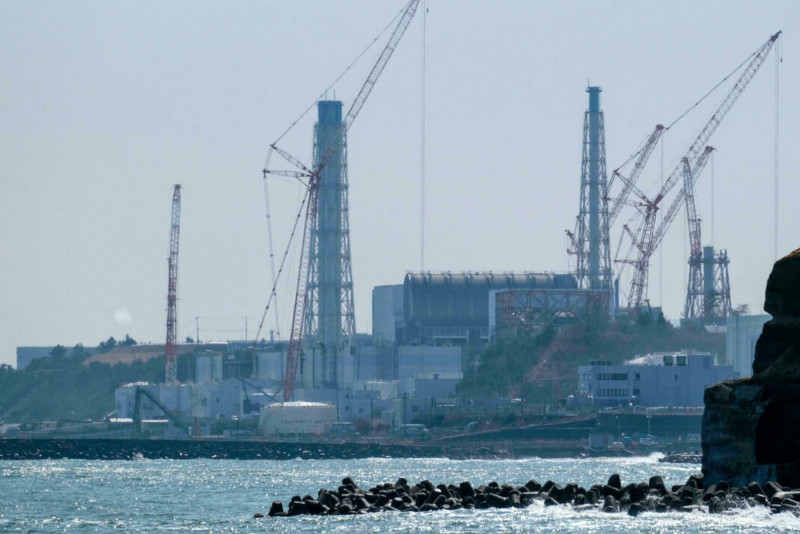
According to German Press Agency, Japan will likely start discharging treated wastewater from the tsunami-wrecked Fukushima nuclear plant into the Pacific Ocean in August. – AFP pic, July 5, 2023

TOKYO – The Japanese government will likely start the controversial discharge of treated wastewater from the tsunami-wrecked Fukushima nuclear plant into the sea starting as soon as August, German Press Agency (dpa) quoted a report.   

The International Atomic Energy Agency (IAEA) said yesterday that it approved of the government’s plan to release massive amounts of treated radioactive water into the Pacific Ocean. 

With the greenlight from the United Nation’s (UN) nuclear watchdog, the government will now take the next few weeks to try to win over sceptical local communities and neighbouring countries before proceeding with the first discharge next month, the Nikkei newspaper reported today.

Fishermen’s cooperatives in neighbouring prefectures who oppose the plan have said they will petition the government and Tepco, the operator of the crippled Fukushima Daiichi nuclear power plant, this week. 

Japan’s scheme has also been met with concern in China, while South Korea says that it intends to maintain the import ban on fishery products from Fukushima as long as safety concerns among the public persist. 

IAEA head Rafael Grossi, who is currently in Japan, is expected in Seoul later this week. 

On March 11, 2011, a tsunami triggered by a huge earthquake slammed into the Japanese coast, leading to thousands of deaths and a meltdown at the Fukushima Daiichi nuclear power plant. 

Even 12 years on, water is needed to cool the reactors that were destroyed. 

But knowing that the storage capacity was finite, plans were made to filter the contaminated water, then dilute and discharge it. 

Opposition has been fierce from local fishermen who fear a wary public will not want to consume their catches. They note that the filtration process cannot remove the tritium. 

But nuclear experts in Japan and at the UN say there is no danger because the diluted wastewater will only contain a trace amount that is not harmful to humans. – Bernama, July 5, 2023
Related News

World / 2w

24 injured as two earthquakes strike Japan

1mth

Cocaine in shoes: Invited on vacation to Japan, only to end up as drug mules

Malaysia / 2mth

Body found at KLIA2 in tyre storage compartment of aircraft from Japan

Malaysia / 3mth

Woman, believed to be foreigner, allegedly causes disturbance at KLIA (video)

Malaysia / 3mth

Malaysian dies while transiting in Bangkok to Japan (video)

World / 3mth

7.1-magnitude earthquake hits Japan’s Kyushu island

Spotlight

Malaysia

Anwar receives special recognition as 10,000 Muslims gather in Putrajaya

Malaysia

Video of elderly man being assaulted goes viral on social media

Malaysia

The wide reach of corruption and organised crime in the country

Malaysia

Malaysia pushes to give smaller economies stronger voice in Asia-Pacific trade – Anwar

Malaysia

No tsunami threat to Malaysia after 5.4-magnitude earthquake hits Banda Sea

Malaysia

Who is calling the shots in Negeri Sembilan as Ismail’s position comes under scrutiny?

Opinion

Ayob Khan: When the uniform comes off, the principles remain

Malaysia

MySiren to send emergency alerts to compatible phones nationwide from Nov 29 test

You may be interested

World

UN climate talks collapse as EU rejects ‘weak’ COP31 deal

World

US attorney-general declines to confirm whether Nvidia CEO was investigated

World

US weighs new tariffs on 16 trading partners, Malaysia faces 19% rate cap

World

Trump backs Jensen Huang's return as Nvidia CEO amid national security scrutiny