


Business

China lobbies Australia Parliament for help to join CPTPP

Suggestion comes the same week as warning to businesses to brace for new tensions with Beijing

Updated 5 years ago · Published on

China lobbies Australia Parliament for help to join CPTPP
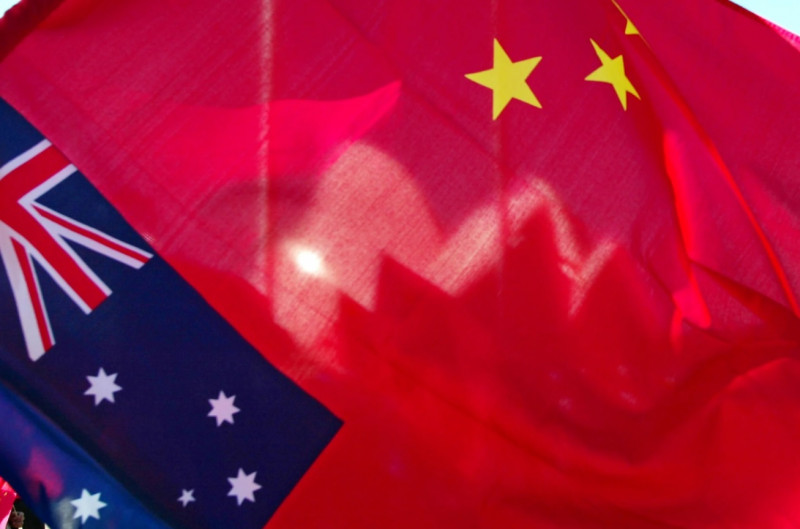
The Chinese embassy says China and Australia’s economies have enormous potential for cooperation. – AFP pic, September 10, 2021

SYDNEY – China is lobbying the Australian Parliament to help it join a major regional trading pact, describing the strength of Chinese trade with Australia and avoiding mention of billions of dollars in punitive sanctions imposed by Beijing.

The Chinese embassy’s suggestion, in a submission to a parliamentary inquiry, came in the same week that Australian Treasurer Josh Frydenberg said Australia must diversify its economy to rely less on China, its largest trading partner, and warned businesses to brace for new tensions with it. 

Since the Comprehensive and Progressive Agreement for Trans-Pacific Partnership (CPTPP) was signed by 11 nations, including Australia in 2018, Britain, China, Taiwan and Thailand have signalled interest in joining it.

The Chinese embassy said in its submission that China and Australia’s economies have enormous potential for cooperation.

It said a China-Australia Free Trade Agreement (CAFTA) signed in 2015 had led to rapid development of their relationship, dispute settlement mechanisms, and last year, 95% of tariffs had been eliminated.

However, many of the Australian agricultural goods listed in the Chinese submission faced Customs disruptions or Chinese dumping inquiries last year, which have been widely interpreted in Australia as politically motivated, after Australia called for an international inquiry into the origins of the coronavirus.

“It is no secret that China has recently sought to target Australia’s economy,” Frydenberg said in a speech in Canberra last Monday.

Australia’s Foreign Affairs and Trade Department told the inquiry that expanding membership of the CPTPP beyond the 11 original signatories would help Australia diversify its export markets.

Exports to China hit a record A$19.4 billion (RM59.3 billion) in the 12 months to July 31, up 72% from the prior 12-month period on the back of strong iron ore demand. – Reuters, September 10, 2021


Related News

Opinion / 2d

The Jensen Huang case: The racial trope driving US - China relations

Opinion / 1w

Honey Trap: Western media response to Jensen Huang and the latest China spy story

Opinion / 3w

Will the AI bubble burst?

Events / 4w

Shanghai trade fair returns to KL with 500 exhibitors in November

Malaysia / 2mth

PM Anwar loses beloved elder brother; Idrus Ibrahim passes away

Malaysia / 2mth

Anwar asks Loke to reconsider resignation over Najib pardon

Spotlight

Malaysia

Anwar receives special recognition as 10,000 Muslims gather in Putrajaya

Malaysia

Video of elderly man being assaulted goes viral on social media

Malaysia

The wide reach of corruption and organised crime in the country

Malaysia

Malaysia pushes to give smaller economies stronger voice in Asia-Pacific trade – Anwar

Malaysia

No tsunami threat to Malaysia after 5.4-magnitude earthquake hits Banda Sea

Malaysia

Who is calling the shots in Negeri Sembilan as Ismail’s position comes under scrutiny?

Opinion

Ayob Khan: When the uniform comes off, the principles remain

Malaysia

MySiren to send emergency alerts to compatible phones nationwide from Nov 29 test

You may be interested

Business

MAG to add 10 Boeing Dreamliners in long-term fleet expansion drive

Business

Three Malaysian firms placed on US trade blacklist over advanced technology diversion fears

Business

Oil prices holds above US$80 as Hormuz attacks heighten supply concerns

Business

NexG share surge puts spotlight on RM7.5b takeover proposal as SC examines trading

Business

Pengerang needs to create wider economic value, not just store more oil, says expert

Business

Oil retreat offers limited relief as ringgit weakens against firmer US dollar

Business

Govt moves to block seven US-blacklisted entities from accessing local data centres

















