BERSIH has urged the government to push ahead with institutional reforms, warning that efforts to address past corruption scandals must go beyond holding individuals accountable and tackle the weaknesses that allowed them to happen.
Its chairman Faisal Abdul Aziz said reforms introduced under Prime Minister Datuk Seri Anwar Ibrahim’s administration were steps in the right direction, but more needed to be done to strengthen accountability.
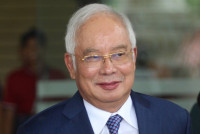
In a series of posts on X yesterday, Faisal questioned whether sufficient safeguards had been put in place to prevent a repeat of major corruption scandals, citing the house arrest granted to former prime minister Datuk Seri Najib Razak.
“Have we truly closed the gaps that could allow a scandal of this nature to happen again?
“We cannot rule out the emergence of a second or third generation of kleptocrats if the country’s political and institutional ecosystem remains weak, leaving room for abuse of power, corruption and the unlawful accumulation of wealth,” he said.
His remarks came as Anwar entered the final year of his first five-year term, with the prime minister highlighting the government’s efforts to strengthen the economy while acknowledging that more work remained.
Faisal acknowledged several legislative measures introduced under the Madani administration, including the Public Finance and Fiscal Responsibility Act 2023 and amendments to the Audit Act 1957 in 2024.
However, he said these measures needed to be accompanied by more comprehensive institutional changes, particularly in strengthening corruption prevention and enforcement.
Among the outstanding issues he highlighted was the proposed separation of the attorney-general’s and public prosecutor’s roles, which has yet to be fully implemented.
He also called for a more comprehensive review of the Malaysian Anti-Corruption Commission’s accountability framework and the introduction of a Political Financing Act to address corruption risks linked to political funding.
“Bringing down one kleptocrat does not mean we have eliminated kleptocracy,” he said.
Faisal said the administration’s final year should be an opportunity to address the remaining gaps and ensure that institutional reforms provide lasting protection against corruption, regardless of who holds power.
He warned that failing to do so could leave future generations facing similar problems.
“Imagine the country facing another kleptocrat 20 years from now. If that happens because we failed to close the gaps that allowed kleptocracy to emerge, what explanation will we give our children and future generations?” he added.
“Our struggle is not simply about opposing one kleptocrat, but ensuring that the conditions which allow another to emerge no longer exist.” – November 25, 2026