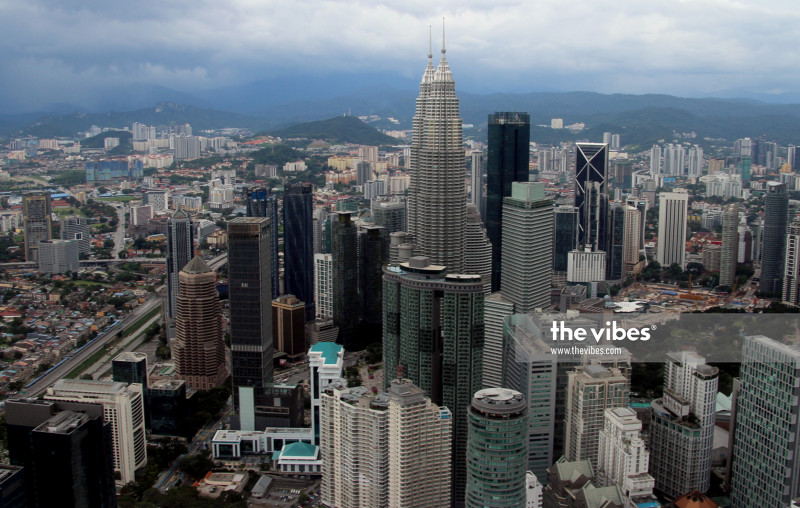
KUALA LUMPUR – When anticipating what is to come for the global economy, businesses must analyse the situation like a game of chess.
Business leaders speaking at the Horasis International Digital Meeting’s plenary session on The Global Economic Outlook on Thursday advised for a more strategic approach in getting the economy back on track.
Chief among them were PETRA Group chairman and chief executive Datuk (Dr) Vinod Sekhar, who said when looking at the situation from the right lens, people will see that the opportunities to grow are there and that markets will come back.
“This is where leadership must come in, you know, leaders have to pivot and not remain stagnant.
“So economic leaders, CEOs of big companies, must take that position to stabilise the market and bring investment back to the area that’s needed; then others will follow.
“Senior economic leaders have to play the role that’s required of them, that is to lead, that is to go in and take a chance to take the positions that are required of them,” said Vinod, who co-chairs the event with Horasis founder and chairman Dr Frank-Jürgen Richter.
Practising what he believes, PETRA has found opportunities through this process by pivoting and understanding where the market is going. It had the opportunity to accelerate its sustainable technology businesses, such as through the construction of modular buildings that have been built three times the number of factories in Australia.
Apart from seeing the global economy like a chessboard, chief economist of the Asia Infrastructure Investment Bank in China, Erik Berglof, wants companies to learn from the war in Ukraine and be less reliant on Russian energy when the world is investing in renewable energy.
He also said the Asian market is showing positive signs of revival as the largest free trade area has been formed, and there are a lot of bilateral arrangements and opportunity creation.
“There’s a whole new world opening up in Asia and I think we should take some solace from an emphasis in that there will be opportunities.”
Chairman of Axilor Ventures in India, Kris Gopalakrishnan, added that the global economy is changing rapidly, in the automotive, healthcare, energy, retail and e-commerce sectors. However, he is unhappy because those with money are still stuck in old models of moving the economy.
If this does not change, especially in developing countries, many from the middle to lower-middle-class will suffer, he added.
“We need to figure out a better model.”
With a global pandemic, political instability and the invasion of Ukraine that has caused the economy’s rocky road, founder and managing partner of Aventures Capital in Ukraine, Andrey Kolodyuk, believes that one of the solutions is to strengthen Ukraine.
“The Russian and Ukrainian common economy just warrants 3.4% of the global one, but you can see that all the cars in the world are affected because of this invasion.”
When Ukraine is strengthened, either through innovation or economic partners, Kolodyuk believes that everything in terms of business will work for the good of everyone.
Addressing the global economic outlook, the panel discussion sought to look at the deep divisions that need to be eased and managed for the economy’s revival.
The session was chaired by CNN Digital International (UK) executive editor Inga Thordar.
Horasis is an independent, international think tank, headquartered in Zurich, Switzerland.
The event gathered more than 1,000 selected world leaders to discuss their unparalleled experience and to devise novel ideas to navigate through developments during the post-Covid-19 era and Russia’s invasion of Ukraine. – The Vibes, May 21, 2022