KUALA LUMPUR – The government must take a holistic approach in executing structural reforms, including the possible reinstatement of the goods and services tax (GST), that will boost the country’s economic resilience as well as the ringgit in the long run, according to economists.
The path towards the betterment of the economy has to be based on long-term views and solutions rather than the short term, Bank Islam Malaysia Bhd chief economist Mohd Afzanizam Abdul Rashid said.
“The solution has to be for the long term because it requires (overall) economic improvements. We should not focus too much on short-term volatility, but rather on the long term and how we can link that to economic policies that will yield a more favourable outcome for people and businesses,” he said.
The long-term view applies to both the economy and the currency, he opined.
“We could see the ringgit steadily weakening over time versus major currencies such as the US dollar and Singapore dollar. Perhaps, what the currency market is trying to tell us is that the country’s competitiveness level could be having some issues,” he explained.
The ringgit fell to 4.4000/4030 against the US dollar on Friday as investors fled to safe-haven assets including the greenback as the European Central Bank unveiled plans to hike interest rates next month.
The local currency also continued to fall vis-a-vis the Singapore dollar to a record low of RM3.1856.
Afzanizam said that Malaysia’s reliance on imported food items, as well as on foreign labour, has exacerbated the problem as the country has sold more ringgit to acquire the commodities.
“According to the Malaysian Statistics Department, the self-sufficiency ratios are low for agricultural items such as beef (22.2%), for which we spent RM2.2 billion on imports; mutton (9.6%) with RM879.4 million spent on imports; chilli (30.9%) and rice (63%).
“In addition, when we import labour from abroad, the level of remittances is high because they send their hard-earned money home and do not spend it here,” he continued.
More than 70% of imported mutton was from Australia while mango, coconut and beef were mainly imported from Thailand, Indonesia and India, respectively.
Citing Agriculture Department statistics, Afzanizam said the agriculture sector was one of the country’s economic pillars in its early stage of development with a contribution of 28.8% to the total gross domestic product (GDP) in 1970 and 22.9% in 1980. Nevertheless, in 1990 the sector (16.3% share) was overtaken by the manufacturing sector (24.6%) following the advancement of the manufacturing sector that reflected the success of Malaysia’s Industrial Master Plan-Phase 1.
As of 2020, the share of agriculture stood at 7.4% of overall GDP and in recent years, the share of Malaysia’s agriculture sector in the economy has been comparatively small compared with neighbouring countries such as Indonesia (13.7% in 2020) and Thailand (8.6% in 2020).
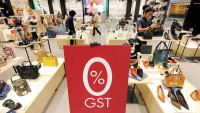
On the consumption tax, Malaysia University of Science and Technology professor and dean of the Institute of Postgraduate Studies, Geoffrey Williams, said the GST’s reintroduction is a sensible idea but it should not be implemented immediately.
“Once inflationary pressures recede, the GST should be included in a broader tax overhaul. To eliminate price distortions, tax reform should lead to the imposition of a unified sales tax on all goods. The entire system can be made more progressive by imposing a separate tax on luxury products.
“However, a tiered GST is distortive and should be avoided, with the exception of customary exemptions on essential products. The tax reform should also encompass cutting other taxes and improving the efficiency of the tax system,” he said.
He went on to say that in general, taxes are either imposed on income or on spending and that in many nations, including Malaysia, income taxes are easy to avoid while spending taxes are not.
“Therefore, consumption taxes such as the GST are preferable and allow individuals, households, and businesses to pay lower income taxes. Companies’ taxes should also be modified. Numerous small and medium enterprises, for instance, intentionally report zero profits to avoid paying taxes,” he said.
According to him, large corporations reallocate income utilising transfer pricing to evade taxes; consequently, many end up paying less tax than their employees, a situation that must also be addressed.
On the GST timeframe, the government is also of the view that the reintroduction will take time.
In the latest People’s Financial Report released on Friday, Finance Minister Datuk Seri Tengku Zafrul Tengku Abdul Aziz gave assurances that no new tax will be introduced unless the country’s post-Covid-19 economic recovery is on a stable and solid track.
“Any new system of taxation needs to be approved by Parliament and, if we take into consideration the requirement for public engagement as well as improvements to the existing system, it is unlikely for the GST to be implemented this year,” he said. – Bernama, June 12, 2022