HONG KONG – Asian stocks were mixed today as traders struggled to recover some of the losses suffered at the start of the week, while oil bounced from a rout, though recession alarms continue to ring loud.
The euro clawed its way back slightly after hitting parity with the dollar for the first time in two decades, though it remains under pressure from growing concerns about an energy crisis across the eurozone and the European Central Bank’s slower pace of monetary tightening.
Traders are also awaiting the release of a series of key indicators this week, including the all-important consumer price index later today, with expectations for another increase to a fresh 41-year high.
Another big spike in prices will reinforce the Federal Reserve’s determination to lift interest rates 75 basis points for a second successive month in July, adding to concerns that officials could go too far and tip the economy into recession.
Still, Lauren Goodwin of New York Life Investments said policymakers were unlikely to shift from their hawkish tilt for now.
“This is widely expected to be a really strong print,” she told Bloomberg Television.
“Even if it is not, I don’t think that changes the Fed’s perspective in a couple of weeks. We won’t have enough evidence that inflation is convincingly turning over.”
In a further sign of the pressure being felt around the world from surging prices, the New Zealand and South Korean central banks each lifted rates 0.5 percentage points today, the first such increase by Seoul since 1999.
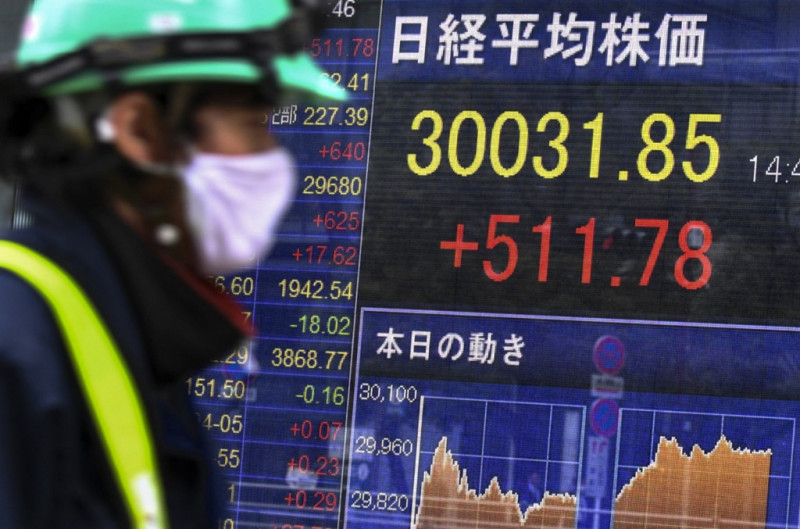
After losses on Wall Street, Asian equities were mixed. Shanghai edged up after data showed a forecast-beating jump in Chinese exports, while there were also gains in Tokyo, Sydney, Seoul, Wellington and Taipei.
However, Hong Kong was unable to hold earlier gains, while Singapore, Manila and Jakarta and Mumbai were in the red.
London fell despite data showing the UK economy unexpectedly saw growth last month. Paris and Frankfurt also fell.
Europe gas crisis
Stephen Innes at SPI Asset Management said equities could continue to struggle owing to a perfect storm of crises engulfing trading floors.
“Typically, equity markets can deal with one risk relatively well,” he said in a note. “But the current setup of sticky inflation, rapid Fed tightening, growth/recession risks and excessive rates volatility, to name a few, have at times left investors defenceless.
“And with the market coalescing to a bearish consensus, stocks are having trouble sustaining a meaningful rally.”
Both main crude contracts rose but were and nowhere near recovering the more than 7% drops suffered yesterday, hit by bets on a drop in demand and fears of more Covid-19 lockdowns in Shanghai.
The commodity has lost a large chunk of the gains seen after Vladimir Putin’s invasion of Ukraine, despite bans on imports from Russia, with some analysts saying consumers were simply choosing not to buy fuel because of the high price.
Data from the American Petroleum Institute showed US stockpiles rose 4.76 million barrels last week, Bloomberg News reported citing people familiar with the figures, indicating demand slacking off even during the key summer driving season.
Joe Biden’s visit to Saudi Arabia on Friday will be followed intently as he tries to persuade the crude giant to pump more to help reduce prices.
On currency markets, the euro held just above US$1.0 a day after hitting parity yesterday for the first time since late 2002, with a worsening energy crisis fanning expectations that the eurozone will plunge into recession.
With Russian energy giant Gazprom starting 10 days of maintenance Monday on its Nord Stream 1 pipeline, the bloc – and particularly gas-reliant Germany – is waiting nervously to see if the taps are turned back on.
“A prolonged cut to the gas supply would halt a lot of economic activity, sending (Germany) deep into recession,” said Tapas Strickland at National Australia Bank.
He said July 21 – when the gas should be switched back on – will be a crucial date.
“That date also happens to be the day of the next ECB meeting,” he added. “Either of these events are key risk events. Russia playing gas politics by not switching on the gas supply would likely see the euro lurch much lower.” – AFP, July 13, 2022