LONDON – The Opec oil producers' club will hold a second day of talks on Tuesday, as they attempt to reach agreement on extending production cuts introduced as the coronavirus pandemic weighs on global demand.
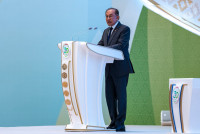
“2020 continues to be a year of immense challenges caused by the Covid-19 pandemic,” said Abdelmadjid Attar, who currently holds the rotating presidency of the Organisation of the Petroleum Exporting Countries (Opec). Attar, who is also Algeria's energy minister, was speaking in a live broadcast at the beginning of the group's video conference meeting.
The common goal of the 13 member states is to keep afloat a crude market devastated by the Covid-19 pandemic and which is slowly recovering from the depths into which prices plunged at the end of April. They will be joined by Russia and other allies forming the Opec+ grouping on Tuesday.
In April, Opec members agreed to cut production by 7.7 million barrels per day (bpd), which was meant to be eased to 5.8 million bpd in January 2021.
However, most observers expect the cut instead to be extended by three to six months to take into account the ongoing effects of the virus.
Monday’s talks were adjourned with no decision and Tuesday's discussions “won’t be easy”, said Iran’s oil minister Bijan Namdar Zanganeh.
“Some countries oppose extending the production reduction agreement... It will be difficult to come to an agreement,” he was quoted by his ministry as saying.
A “second wave of the pandemic and related lockdowns put a damper on demand,” Attar told the ministerial meeting.
“The shock to the oil industry is massive and its severe impacts will likely reverberate in the years to come,” said Attar.
Despite encouraging news from trials for vaccines by pharmaceutical companies, global deployment will take time and its effects might not become significantly apparent before the second half of 2021, Attar cautioned.
Back in March, Opec held its last meeting in its Vienna headquarters before the pandemic forced them online. That meeting turned into a fiasco when Saudi Arabia and key ally Russia failed to reach an agreement and spent the next month engaged in a mutually damaging price war.
Kremlin spokesman Dmitry Peskov, quoted by the Ria Novosti agency, said the current disagreements among Opec members were “not comparable to those in March in terms of severity”.
Whether all members are currently sticking to the output quotas assigned to them has also become a sensitive topic.
Those exceeding their allotted output – foremost among them Iraq and Nigeria – regularly come in for a scolding from Prince Abdelaziz bin Salman, energy minister of Opec kingpin Saudi Arabia.
Crude oil prices have picked up by 25 percent since the beginning of the month and have returned to roughly their pre-pandemic levels of between 45 and 50 dollars per barrel for both the US benchmark, West Texas Intermediate (WTI), and Europe's Brent North Sea contracts.
However, they were down slightly on Monday and those losses deepened after Monday's Opec talks ended, in what analysts said was a sign of investor jitters.
“Most traders thought that Opec’s production boost postponement was a done deal," said Bjornar Tonhaugen, analyst at Rystad.
“The reality is far from that,” he added, with some Opec members still “holding a grudge against their laggard allies” who did not reduce their oil production as promised.
However Tonhaugen believes Opec will agree on Tuesday to extend the production cuts for at least three months, though the talks may drag on into the night.
“All in all, Russia and Saudi Arabia, when they agree between them – which seems to be the case now – usually manage to convince their Opec+ allies to follow a common direction," he added. – AFP, December 1, 2020