
KUALA LUMPUR – Essential in-depth explanation is needed on the Malayan Communist Party (MCP) and the Malaysia Agreement 1963 (MA63) in the government’s Form 5 history textbook for schools, according to a report produced by the National Education Improvement Initiative (IPPN).
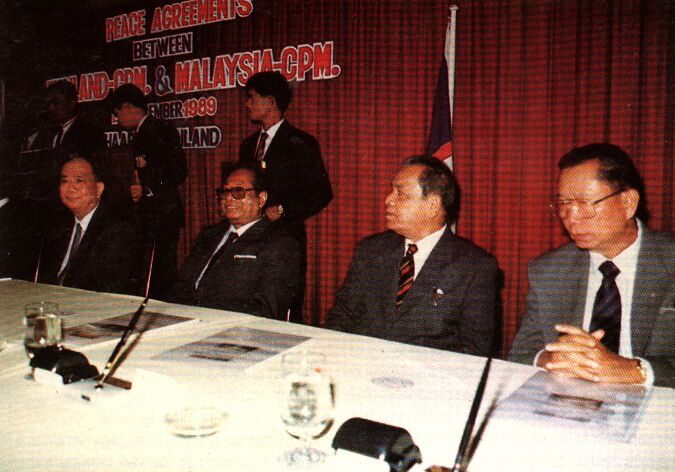
As it is, a detailed elucidation of the Hat Yai Peace Agreement in 1989 between the Malaysian government and the MCP is wanting.
The landmark agreement had a huge impact on the nation’s security as the communist threat effectively ceased following the signing of the deal between MCP leader Chin Peng and Malaysian government leaders in Hat Yai, Thailand.
MCP was then represented by its secretary-general Chin Peng, chairman Abdullah C.D., and commander of the 10th Regiment Rashid Maidin.
Representing the Malaysian government were Home Ministry secretary Tan Sri Wan Sidek Wan Abdul Rahman, police inspector-general Tan Sri Mohd Hanif Omar, and armed forces chief Datuk Seri Hashim Mohd Ali.
In the textbook, the Hat Yai agreement is explained as the end of the communist insurgency in Malaysia, with the armed wing of the party being disbanded and their weapons destroyed or dismantled.
The feedback is featured in the report on improvements to public schools’ Form 1 to Form 5 history textbooks (“Laporan Cadangan Penambahbaikan Buku Teks Sejarah Tingkatan 1-5”).
It is prepared by IPPN, a group of 16 cultural and education organisations aiming to help spur a more thorough and balanced view of the nation’s history.
MA63 issues need further explanation
Similarly, the report also suggests the textbook expand its explanation of MA63 to include issues on the equal status of Sabah, Sarawak, and Singapore with the Federation of Malaya.
These include the rights of Sabah and Sarawak to exercise their own immigration and education standards.
The deal made possible the merger between the four entities to form Malaysia on September 16, 1963. Singapore separated from the federation two years later.
MA63 is an international treaty registered with the United Nations in September 1970, bearing the registration number 10760.
The report has also highlighted that the contribution of non-Malay figures towards national identity and development should be detailed extensively.
Malaysian icons of all races who have contributed to arts and literature – regardless of the language they use – should have been extensively included, the report added.
In chapter seven (titled “Building the Country’s Prosperity”), the textbook mentions national cultural icons such as Azah Aziz, Hamzah Dolmat, Lim Swee Tin, Samuel J. Dass, Shuhaibun Yussuf, and Mathew Ngau Jau.
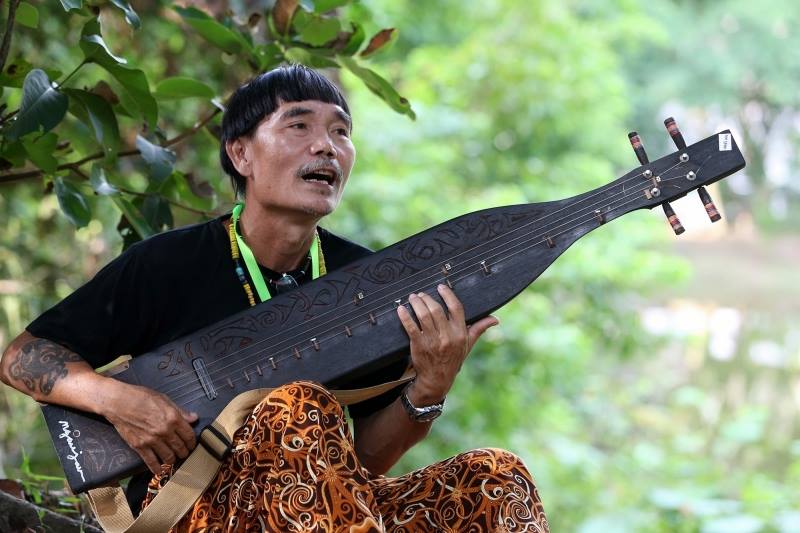
There is a similar suggestion for the subsequent chapter eight (titled “Building the Nation’s Well-being”) to include the contributions of non-Malay corporate and business icons.
In the aforementioned chapter, the textbook dedicates a section towards the trading society and Bumiputera industries.
It mentions business magnates such as Tan Sri Mohd Effendi Norwawi, Tan Sri Azman Hashim, Tan Sri Syed Mokhtar al-Bukhary, and Tan Sri Mustapha Kamal Abu Bakar.
The report suggests that the contribution of figures from other ethnic groups should be given proper credence in the book, along with their pictures and brief explainers.
In the same chapter, the subsections on sovereignty, the federal system, democratic practices, national unity, foreign policies, and contemporary global issues are all too similar to civic education, it says.
The report suggests the deluge of explanations on these topics has handicapped basic elements in the textbook to help convey its purpose as a history book. – The Vibes, October 31, 2022
This story is the fifth and final part of a series dealing with the IPPN’s report on the Standards-Based Curriculum for Secondary Schools history syllabus
Part one was on IPPN’s call for a more accurate portrayal of non-Muslim minorities in history textbooks, while part two was on Indian cultural influence on the early Malay kingdoms. Part three was on the participation of Chinese labourers in Malaya’s early economic sectors, and part four highlighted non-Malay issues in Malaya’s independence
IPPN comprises the following NGOs: Pertubuhan Ikram Malaysia; LLG Cultural Development Centre Bhd; Tamil Foundation; Kuala Lumpur Selangor Chinese Assembly Hall; Gabungan Persatuan Guru-Guru Sekolah Cina Malaysia (Jiao Zong); Merdeka University Bhd; MySkills Foundation; Persatuan Bekas Siswazah Universiti dan Kolej di China, Malaysia; Negri Sembilan Chinese Assembly Hall; Child Information Learning Development Centre; Educational, Welfare & Research Foundation Malaysia; Global Organisation of People of Indian Origin Malaysia; Centre for Malaysian Chinese Studies; United Chinese School Committees’ Association of Malaysia; Angkatan Belia Islam Malaysia; and United Chinese School Alumni Associations of Malaysia