NOW a centrepiece of Italian cuisine, the beloved tomato was shunned for years in the country's kitchens.
An import from the Americas dating back to the 1500s, the tomato was nicknamed the "poison apple" in Italy, and was feared for generations even after it was proved to be safe to eat.
Tomatoes only became widely eaten around 150 years ago, when pizza became popular.
Could a similar process be underway for food made with insects?
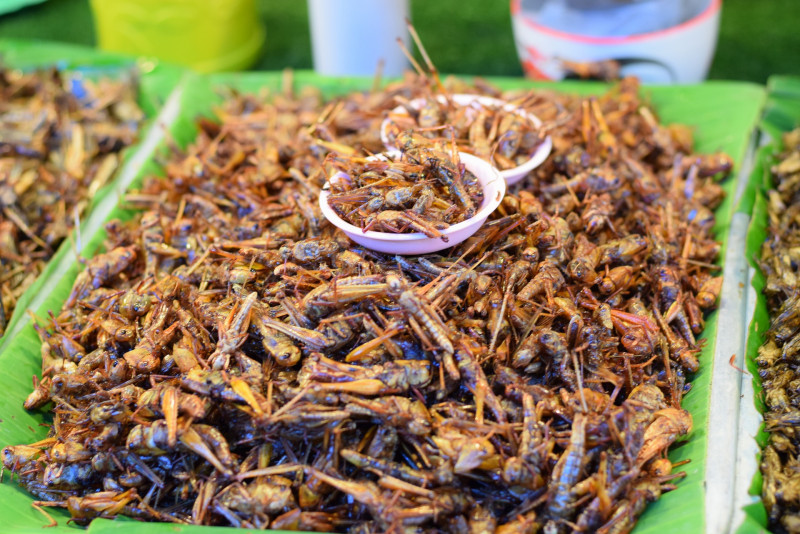
The benefits of insect-based foods are well-documented: the cultivation of insects for food is environmentally sustainable; insects are high in nutritional value, and can be prepared in a wide variety of ways.
An estimated two billion people eat insects regularly, according to the United Nations Food and Agriculture Organisation (FAO).
Earlier this month, legislation in Italy helped pave the way for some insect-based products to be sold in Italian stores, by establishing guidelines for how they should be labelled.
However, Carlotta Totaro Fila, founder of the Alia Insect Farm in Milan, told Xinhua: "There is the problem of what I call a 'yuck factor' behind eating insect-related foods."
It is the same problem Italy once had with tomatoes, as well as corn, potatoes, beans, and cocoa.
Totaro Fila and other insect food advocates in Italy use insects to make a powder which can be added to traditional flour to make bread, pasta and pizza. This adds protein to the meal without substantially changing its taste.
"You are aware they are in the ingredient list for the composition of the food, you are aware of the benefits, and you will only choose this type of product if you want to. But you don't see the insects," said Totaro Fila.
According to Carla Severini, a professor of food science and technology at Italy's University of Foggia, the nutritional and ecological benefits of insect-based foods mean that their integration into Italian cuisine is inevitable.
However, a "cultural leap" will be required for it to become a staple, she said.
"In order to produce a kilogramme of beef it takes around 22,000 litres of water," Severini told Xinhua.
"For insects, it can change a bit depending on which of the 2,000 kinds of cultivated insects are used. But at the most a kilogramme of insect protein requires no more than 150 litres. That is a difference too large to ignore."
Insects are rich not only in protein, but also in healthy fats, iron, and calcium.
A report from the Rome-based FAO has predicted that in the future, farm-raised insects will play an ever-increasing role in human diets, as well as in animal feed.
Both Totaro Fila and Severini said that as a country known for its gastronomic riches, Italy could play a key role in helping insect-related foods become more accepted in Europe and beyond.
A research project released earlier this month by the University of Bergamo, near Milan, found that two out of three Italian consumers said they were willing to try insect-based foods. Totaro Fila called this "amazing" progress.
Meanwhile, Severini predicts that it will only take a few years for Italians to start regularly seeing insect-based options in grocery shops and on restaurant menus. She predicts that the products will eventually be embraced by Italian foodies.
"Italian chefs are among the most innovative in the world," she said. "We will see variations we cannot yet imagine."
A restaurant in Milan has already started selling cheeseburgers that contain an insect powder made from crickets, Fila said.
"It's a very good cheeseburger and they sell out every day," she said. "I am sure that if the taste is good people will overcome the 'yuck factor'. It's just a matter of time." – Bernama, April 2, 2023