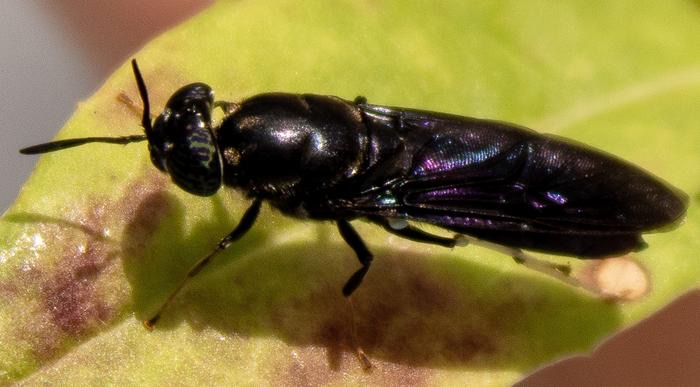
RESEARCHERS in the US have come up with the strange-sounding idea of using dead flies to make biodegradable plastic. Their research is based on black soldier flies, the carcasses of which contain a polymer that could be used to make bioplastics.
In light of the climate crisis, solutions for developing less polluting materials are being explored in every corner of the world. Plastic is one of these major sources of pollution. As such, it is no longer unusual to find biodegradable plastics made from plant-based materials like sugarcane, corn or potato waste. However, these materials can be coveted in many fields, potentially finding a second life in sectors such as transport (biofuel) or construction (insulating materials).
To find sources of bio-plastic without the risk of "competing" uses, researchers at A&M University (Texas) suggest recovering waste from the breeding of black soldier flies. The larvae of these insects are used for their nutritional properties and are bred for animal feed and waste consumption. However, the insects have a short life span once fully grown, and more often than not end up as waste. But their carcasses contain chitin, a non-toxic, biodegradable, sugar-based polymer also found in crustaceans such as crabs and shrimps.
After rinsing, demineralising and bleaching the chitin extracted from the flies' bodies, the researchers propose using it to create materials such as polycarbonates or polyurethanes, types of plastic that are currently polluting because they are manufactured from petrochemical ingredients. Moreover, sourcing chitin from flies could avoid potential concerns over certain seafood allergies, explains study co-author, Cassidy Tibbetts, in a news release. The researchers presented their findings at the fall meeting of the American Chemical Society (ACS).
Chitin from fly carcasses has other promising uses. Other researchers working in the same university laboratory have created a hydrogel from chitin, capable of absorbing 47 times its weight in water in just one minute.
"This product could potentially be used in cropland soil to capture floodwater and then slowly release moisture during subsequent droughts," the researchers' news release states. – ETX Daily Up, August 18, 2023