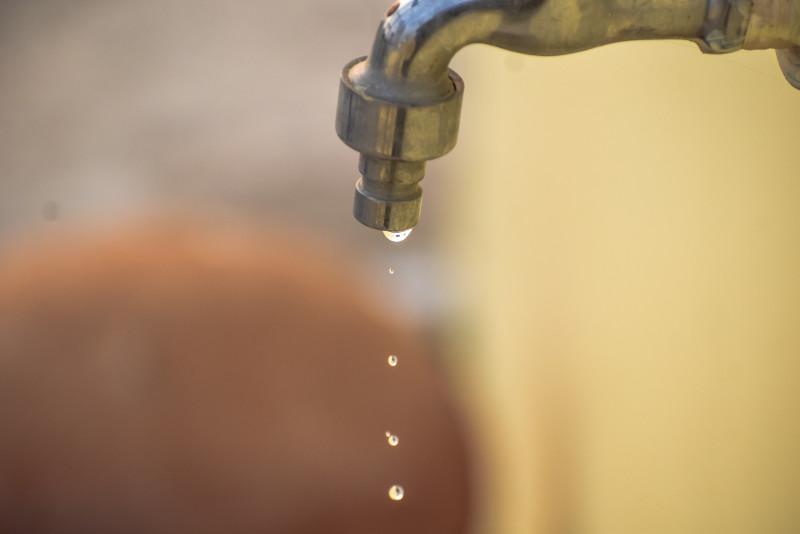
THE ability of a political party to resolve Sabah’s chronic water supply problems has emerged as one of the foremost criteria for voters in determining their choice at the seventeenth Sabah state election.
Associate Professor Dr Nordin Sakke of the Electoral and Geopolitical Studies Unit (GeoPES) at Universiti Malaysia Sabah said a survey involving 3,000 respondents found that 57.1 per cent believed the party they intended to support would be capable of addressing the state’s water issues.
He said disruptions to water supply were viewed as the most significant concern, with 68.3 per cent identifying it as the most serious problem, followed by low water pressure with 18.1 per cent.
Beyond the technical competence of a party, sincerity in addressing the longstanding crisis also ranked highly, with 53.1 per cent of respondents emphasising the importance of genuine commitment.
“Voters do not want political parties to use the water issue merely to win votes, but instead want genuine commitment to solving a problem that has plagued the state for so long,” he told Bernama.
Nordin said the study also showed that 56.1 per cent of respondents confirmed that political parties had raised water issues during their campaigns, with 45 per cent admitting that such messaging influenced their voting decisions.
A further 59.2 per cent viewed water concerns as more important than other issues raised during the campaign, while 67 per cent said they were strongly influenced by candidates and parties that highlighted the matter.
He cautioned that a failure to resolve the crisis could cost parties voter support, noting that 66 per cent of respondents said they would not vote if water issues remained unresolved, while 52.1 per cent were prepared to switch their support to a party seen as more capable of fixing the supply problem.
Although Sabah receives an average of 2,500 millimetres of rainfall annually and its rivers carry an estimated 87 billion cubic metres of water, Nordin said the state continues to face severe supply deficiencies.
“Of that amount, we are only able to access 13 billion cubic metres, or 30 per cent, but actual usage amounts to only 1.4 billion cubic metres, less than 10 per cent of what is accessible,” he said, adding that the gap highlights major shortcomings in infrastructure and water management.
A separate study by the Darul Ehsan Institute (IDE), conducted in collaboration with UMS and the Social and Community Research Organisation (PPSK), found that 76 per cent of respondents also ranked water and electricity disruptions as their top concern.
The focus of issues varied by region, with water and electricity problems dominating in the Interior, East Coast and Kudat, infrastructure and roads in Tawau, and cost of living pressures in the West Coast.
The studies concluded that the three critical issues in Sabah are water and electricity supply, infrastructure and road conditions, and the rising cost of living.
Both the federal and state governments have initiated major projects to tackle the water crisis, including the completed Telibong II Phase 2 Water Treatment Plant in Tuaran, which doubled capacity from 80 to 160 million litres per day.
The expansion of the Kogopon 2 plant in Papar is expected to be completed in July 2026, alongside supporting pipeline and storage upgrades. Phase 1 of the Lahad Datu Water Supply System upgrade, with a 60 million-litre-per-day capacity, is scheduled for completion next July.
The new 5-MLD Mamut plant in Ranau is due to begin operations next month, while construction of the Tawau Dam, with storage of 30 million cubic metres, is expected to finish in July 2026.
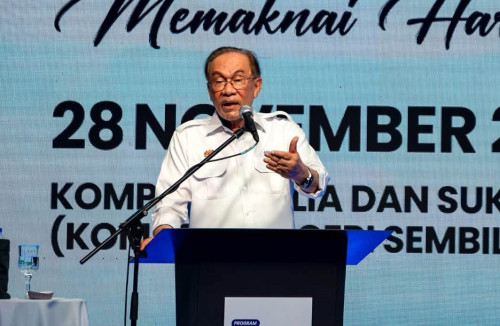
When tabling Budget 2026, Prime Minister Datuk Seri Anwar Ibrahim announced a RM6.9 billion development allocation for Sabah, with water and electricity reliability singled out as priorities.
Since 2024, the federal government has also channelled RM1 billion for Sabah water projects, including pipeline installations in Tawau and the replacement of ageing pipes in Kota Kinabalu, Penampang and Putatan, which are expected to be completed next year.
A total of 1.76 million voters are eligible to cast their ballots on Saturday, when 73 state seats will be contested in PRN Sabah 17. - November 28, 2025