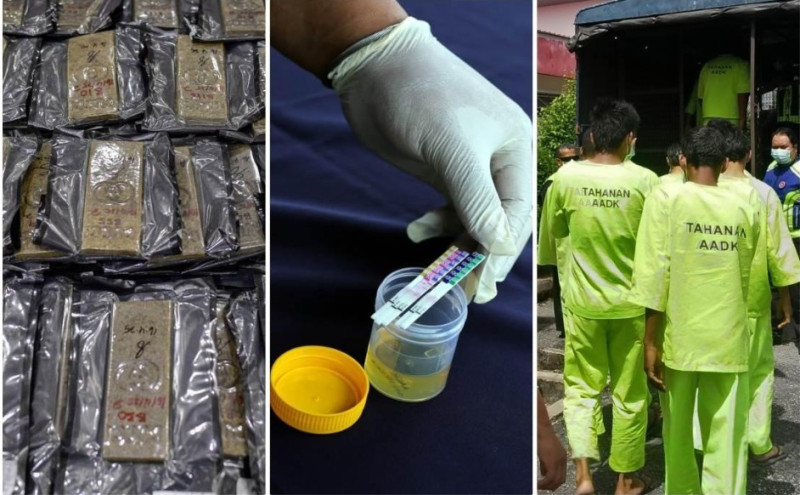
THE menace of synthetic drugs is increasingly ensnaring Malaysian schoolchildren, with the number of students involved rising sharply over the past five years, according to data from the National Anti-Drug Agency (AADK).
Cases now include children as young as 13, highlighting an urgent need for early intervention and specialised mental health support.
The Star, on Saturday, reported that AADK figures reveal that 54,791 primary and secondary school students were detected for synthetic drug abuse and addiction in 2020.
By 2024, that number had surged 73 per cent to 94,793. Preliminary figures from January to September 2025 recorded 76,660 youths engaged in synthetic drug use.
“Since 2020, the majority of youths involved in synthetic drug abuse cases were those aged 16 and 17, or Form Four and Form Five students.
“As of September, last year, 41,615 of those involved were from that age group,” said AADK director-general Datuk Ruslin Jusoh.
He added that lower secondary students aged 13 to 15, corresponding to Forms One through Three, formed the second-largest group, numbering 25,484.
“The data reflects a worrying pattern of synthetic drug exposure among school-going youths, necessitating early intervention and targeted rehabilitation efforts,” Ruslin said.
The AADK chief outlined several categories of substances under the Amphetamine-Type Stimulants (ATS) group that are driving the crisis, including crystalline methamphetamine, commonly known as syabu or ice, methamphetamine tablets such as pil kuda, yaba, yama and pil bom, as well as ecstasy and amphetamine. Psychotropic pills such as benzodiazepine, Erimin 5, APO 5 and Dormicum are also of growing concern.
“Abuse of synthetic drugs poses a significantly higher risk of severe mental health complications, including psychosis and aggressive behaviour, compared with traditional opioids,” he said.
“The direct impact of certain synthetic substances on the central nervous system can trigger serious psychiatric conditions, making treatment and rehabilitation more complex.
“Mental health specialists have revealed that synthetic drug use is strongly associated with hallucinations, paranoia, depression and violent or aggressive behaviour.”
Ruslin warned that the long-term impact on cognitive and emotional functioning can be profound.
“Unlike opioid addiction, which has established pharmacological treatments such as methadone and buprenorphine under Opioid Replacement Therapy programmes, there are currently no widely effective substitute medications for synthetic drug dependency. Recovery relies heavily on intensive psychosocial therapy, structured counselling, and continuous monitoring.”
He also noted the intensity of psychological addiction linked to synthetic drugs.
“Prolonged and persistent cravings are common, making recovery particularly difficult. While opioid addiction also involves strong psychological dependence, initial treatment often focuses on addressing severe physical withdrawal symptoms.
“In contrast, synthetic drug treatment centres focus more on managing behavioural and mental health complications from the outset.”
The AADK director-general stressed that the long-term cognitive and emotional damage associated with synthetic drug abuse can hinder rehabilitation and reintegration into society.
“Greater awareness of the distinct dangers posed by synthetic drugs is needed, alongside enhanced mental health support and rehabilitation resources to address this growing challenge,” he said.
The surge in synthetic drug abuse among Malaysian youths underscores the complexity of the crisis and the urgent need for coordinated responses between schools, families, healthcare providers and law enforcement authorities. - February 21, 2026