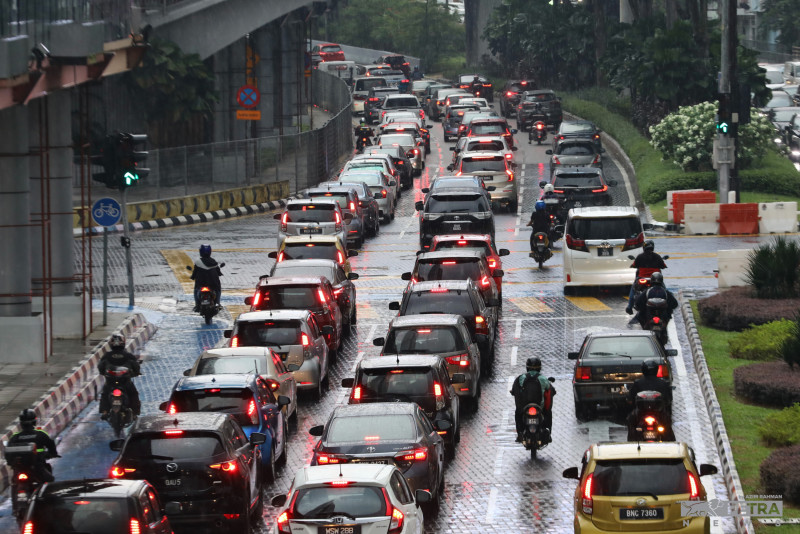
TRAFFIC congestion in the Klang Valley is being driven not only by the rising number of private vehicles but also by poorly coordinated urban development and persistent gaps in public transport connectivity, transport researchers have warned.
The Chief of the Road Safety Research Centre at Universiti Putra Malaysia Universiti Putra Malaysia, Prof Dr Law Teik Hua, told Berita Harian that the region’s worsening gridlock is the result of fragmented urban growth that is not properly aligned with wider regional mobility planning, placing unsustainable pressure on existing road infrastructure.
He said many new developments have not been fully integrated into a comprehensive mobility framework, resulting in traffic being funnelled into limited arterial routes and creating chronic bottlenecks across key corridors.
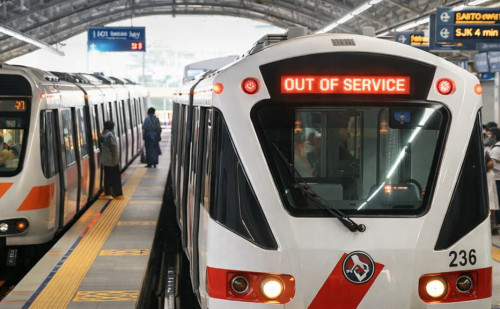
“Public transport networks, although continuing to expand, still face challenges in terms of seamless accessibility from residential areas to stations and from stations to final destinations, which in turn encourages people to continue relying on private vehicles,” he said.
His comments come amid earlier remarks by Kuala Lumpur police highlighting the sheer volume of traffic entering the capital. Kuala Lumpur Police Chief Datuk Fadil Marsus had previously stated that more than three million vehicles enter the city daily, based on Integrated Transport Information System (ITIS) monitoring during early February.
He noted that data from 1 to 12 February showed consistently high vehicle inflows exceeding three million per day, a level he described as a key factor behind unusually severe congestion patterns.
Law said the imbalance between travel demand and infrastructure capacity is being further exacerbated by the mismatch between residential and commercial expansion and the ability of road and transit systems to absorb additional load.
He cited findings from traffic studies conducted between March and September last year across the Klang Valley, which used the Automated Road Incident Detection System (ARIDS), revealing a 30 per cent increase in congestion along the Damansara-Puchong Expressway.
The system, deployed across major highways and arterial routes in Kuala Lumpur and surrounding urban areas, integrates data from platforms such as Microsoft Bing Maps, Google and Baidu, enabling real-time incident detection and congestion analysis.
“Among the most worrying findings is the increase in congestion levels of up to 30 per cent within just six months on the LDP.
“This increase shows that the rate of vehicle growth and pressure on road capacity is occurring very rapidly. The patterns also show that peak hours are becoming longer, no longer confined to morning and evening periods, but extending beyond office hours,” he said.
He warned that the implications of prolonged congestion extend far beyond travel delays, with journey times increasing by between 20 and 50 per cent and broader psychological and economic consequences for commuters.
“Repeated daily stress can contribute to chronic fatigue and reduced concentration, subsequently increasing the risk of minor accidents.
“From an economic perspective, congestion leads to fuel wastage, increased carbon emissions, and losses of billions of ringgit annually due to lost productive hours.
“On a macro level, it affects urban competitiveness and social well-being,” he said.
He added that congestion in the Klang Valley remains persistent even during festive seasons, including Aidilfitri, reflecting the structural nature of the problem rather than temporary spikes in traffic demand.
Beyond the Klang Valley, he noted similar congestion patterns in Johor Bahru, Penang, as well as rapidly growing urban centres in Selangor such as Shah Alam and Petaling Jaya, driven by comparable factors including rising car ownership and concentrated economic activity.
Meanwhile, Senior Lecturer at the School of Civil Engineering, Universiti Sains Malaysia, Prof Associate Dr Nur Sabahiah Abdul Sukor, said heavy logistics traffic is also a significant contributor to congestion in the Klang Valley, particularly during public holidays.
She said freight vehicles often intensify movement during extended breaks to ensure supply chains remain uninterrupted, adding further pressure to already congested road networks.
“An increase in the number of vehicles, poor land-use planning, and inefficient public transport access are also the main causes,” she said.
Experts have urged a more integrated approach to urban development, transport planning and freight management to address what they describe as a deepening structural mobility crisis in Malaysia’s most densely populated region. - April 11, 2026