THERE is no justification for the government to increase basic treatment fees at government hospitals and clinics, given that wages have yet to keep pace with economic expansion and the current cost of living.
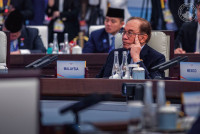
Prime Minister Datuk Seri Anwar Ibrahim stated that existing fee rates should be maintained to ensure that low-income groups are not further burdened.
“If an individual can afford it—for instance, someone in the private sector with a high income who chooses to stay in a first-class ward at a government hospital—then perhaps they could pay more; that might be acceptable.”
“But to impose a burden on the less fortunate—when wages have not risen in proportion to economic growth and the cost of living, even if our inflation rate remains low—is it appropriate for us to raise taxes or fees for the average citizen?
“I am not prepared to do it,” he said during the Dialog Negara programme broadcast.
Currently, subsidised outpatient treatment charges at public hospitals and health clinics under the Ministry of Health (MOH) are set at RM1 for general consultations and RM5 for specialist services.
Anwar, who also serves as the Minister of Finance, noted that the health sector remains the second-largest recipient of allocations in the budget following education, reflecting the government’s commitment to safeguarding the welfare of healthcare personnel and enhancing the quality of public health services.
He explained that the government’s decision to end the contract-based doctor recruitment system, effective January 1, 2027, is supported by savings amounting to tens of billions of ringgit, achieved through improved governance and a firm stance against corruption and financial leakages.
“When we decided to end the contract-based doctor system, it meant that new allocations became available. We are putting an end to these contracts,” he said.
According to Anwar, these savings have also enabled the government to channel significant allocations to the public without the need to raise taxes or reduce essential subsidies.
This includes an allocation of RM16 billion for the Sumbangan Tunai Rahmah (STR) and Sumbangan Asas Rahmah (SARA) cash assistance programs, RM18 billion for civil servant salary adjustments, and RM40 billion to maintain fuel subsidies.
Meanwhile, Anwar also emphasised the need to station doctors in remote and rural areas.
He urged the public to adopt a healthy lifestyle, including reducing sugar intake and engaging in physical exercise to curb the rise of non-communicable diseases such as diabetes and obesity. – November 26, 2026