PRIME MINISTER Datuk Seri Anwar Ibrahim has signalled the possibility of expenditure reductions across government ministries in the 2027 federal budget as escalating geopolitical tensions and economic uncertainty in the Middle East place increasing strain on Malaysia’s financial outlook.
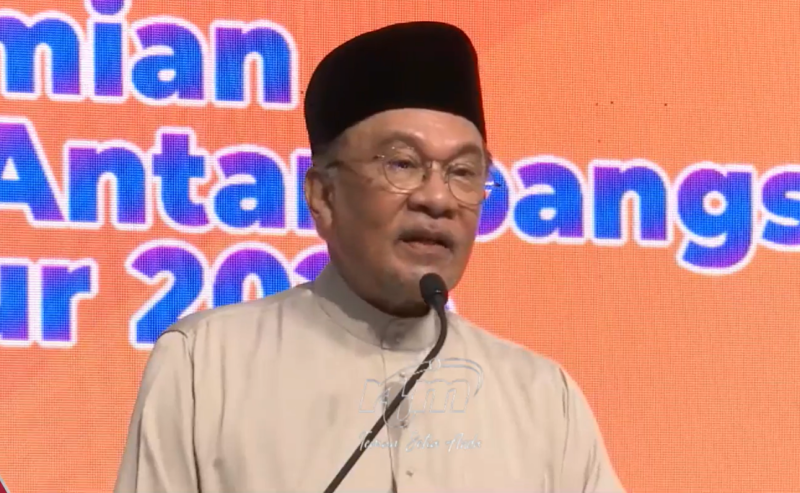
Speaking during the launch of the Kuala Lumpur International Book Fair 2026 on Friday, Anwar said the continuing instability in the Gulf region was beginning to affect regional economies, including Malaysia, despite the country’s strong economic performance earlier this year.
The Prime Minister noted that Malaysia had recorded encouraging growth in the first quarter of 2026 and remained among the stronger-performing economies in both ASEAN and Asia.
“Malaysia recorded encouraging progress in the first quarter of this year, among the best in ASEAN and Asia,” he said.
“However, the ongoing conflict and instability in the Gulf region have also affected our economy.”
Anwar cautioned that ministries must be prepared for greater fiscal discipline moving forward as Putrajaya reassesses spending priorities under increasingly uncertain global economic conditions.
“When I ask for new decisions, ministries must understand that there has to be some reduction in expenditure,” he said.
“It is impossible that nothing can be saved from the RM20 billion allocation.”
“There are many areas where costs can be reduced.”
His remarks mark one of the clearest indications yet that the government may introduce more restrained spending measures in the next federal budget cycle as external pressures continue mounting on commodity markets, trade flows and investment conditions.
The Prime Minister did not specify which ministries or sectors could face reductions, but stressed that education quality, public learning institutions and basic educational infrastructure would remain safeguarded despite wider fiscal pressures.
Anwar said programmes aimed at strengthening knowledge, literacy and intellectual culture would continue receiving priority under the MADANI administration, describing them as essential foundations for long-term national development.
The latest warning comes as governments across Asia grapple with rising energy prices, shipping disruptions and inflationary pressures linked to prolonged instability in West Asia, particularly around strategic trade and energy routes.
Malaysia’s export-driven economy remains vulnerable to fluctuations in global energy markets and external demand, especially as regional conflicts continue affecting investor confidence and supply chains.
Despite the more cautious fiscal outlook, Anwar reiterated that the government would continue pursuing major development strategies centred on digitalisation, semiconductor expansion, artificial intelligence and energy transition initiatives.
He said these sectors had played a significant role in attracting foreign investment and positioning Malaysia among the region’s emerging technology and manufacturing hubs.
However, the Prime Minister warned that economic modernisation and technological advancement must not come at the expense of moral values, intellectual growth and cultural development.
He stressed that the government’s long-term vision for Malaysia extended beyond artificial intelligence and industrial growth, insisting that reading culture and human values remain central to building a truly advanced and civilised nation.
Anwar’s remarks coincided with the government’s confirmation that the RM100 Buku MADANI voucher initiative for secondary school and university students would continue despite ongoing economic challenges.
The programme, aimed at promoting reading habits and improving access to books among young Malaysians, forms part of the broader MADANI agenda focused on educational empowerment, human capital development and social progress. - May 29, 2026