A SUCCESSION of deadly road crashes across Malaysia has triggered renewed scrutiny of the nation's road safety record, with experts warning that the recent fatalities point to deeper structural shortcomings rather than a series of unrelated incidents.
The latest tragedies, which have claimed at least 16 lives within days, have prompted road safety specialists and criminologists to call for a broader reassessment of how Malaysia manages risk on its roads, arguing that recurring patterns of behaviour continue to expose motorists and passengers to preventable dangers.
While investigators continue to examine the circumstances surrounding each crash individually, experts believe the concentration of high-fatality incidents within such a short period highlights persistent issues involving speeding, fatigue, hazardous driving practices, inadequate risk perception and a transport system that remains highly susceptible to human error.
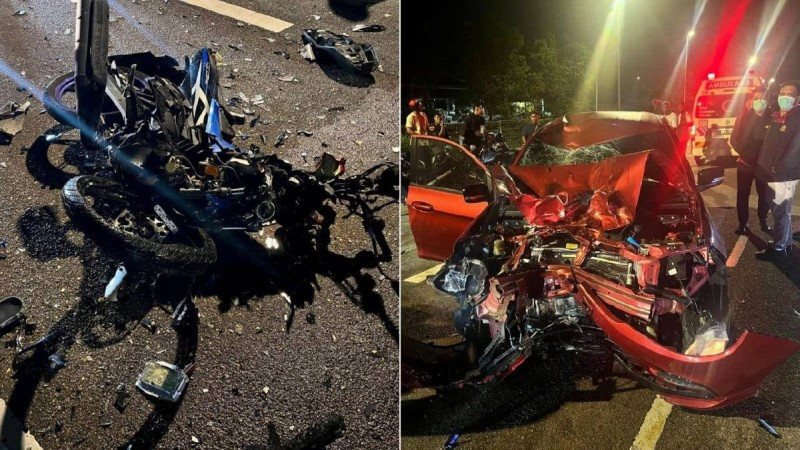
The renewed debate follows three major fatal accidents in recent days.
A collision in Kluang on June 1 claimed the lives of four members of a family and another motorist. Two days later, a crash in Serian, Sarawak, killed five members of the same family. On Sunday, another tragedy in Kedah left six people dead.
Head of the Road Safety Research Centre at Universiti Putra Malaysia, Associate Professor Dr Law Teik Hua told New Straits Times that the clustering of fatal crashes should be viewed as a warning sign rather than dismissed as unfortunate coincidence.
"When multiple fatal crashes occur close together, the question is whether they reveal persistent exposure to known risk factors such as speeding, unsafe overtaking, fatigue, distraction and weak protection against human error.
"In Malaysia's context, repeated occurrence of high-severity crashes suggests the issue is less about isolated events and more about a road system that remains vulnerable to human error," he said.
His assessment was echoed by Malaysian Institute of Road Safety Research (MIROS) chairman Professor Dr Wong Shaw Voon, who stressed that road safety begins with individual responsibility and an appreciation of the destructive potential of motor vehicles.
"Whether we ride motorcycles or drive cars, we all share responsibility for road safety. Every day, we use the roads and every mistake has consequences.
"Sometimes it is not only the driver who suffers. Innocent road users end up paying the price for someone else's actions," he told the New Straits Times.
Criminologist Datuk Dr P. Sundramoorthy argued that road deaths should not be regarded as inevitable accidents but as preventable events that often reflect broader failures in compliance, enforcement and safety culture.
"When serious crashes repeatedly involve speeding, reckless driving, fatigue or poor risk assessment, it indicates underlying weaknesses in compliance, enforcement and road safety culture."
He also highlighted growing concerns over a small segment of younger motorists who are drawn to speeding, illegal racing and social media-driven displays of dangerous driving behaviour, often motivated by thrill-seeking tendencies, peer influence, status competition and a perceived sense of invulnerability.
However, Law cautioned against broad generalisations about younger drivers, noting that such behaviour remains concentrated within a relatively small minority rather than being representative of an entire generation.
As policymakers and safety advocates search for solutions, attention has also turned to emerging vehicle technologies designed to reduce crash risks.
Wong acknowledged that Advanced Driver Assistance Systems (ADAS), including autonomous emergency braking, lane departure warning and lane-keeping assistance, have an important role in improving road safety.
Nevertheless, he warned that technology cannot replace sound judgement behind the wheel.
"Adas is there to help, but we should not take it for granted. These systems are designed to make driving safer, not to encourage drivers to push beyond their limits."
He cautioned that excessive reliance on safety technologies could create a false sense of confidence among motorists, particularly when combined with speeding.
"Everything has design limits. If you exceed those limits, particularly through speeding, the technology may no longer be able to help. Obey the traffic laws, especially the speed limits," he added.
The recent spate of fatalities has intensified calls for a shift away from reactive responses to individual crashes towards a more comprehensive strategy focused on prevention, behavioural change, enforcement and road design, as experts warn that without systemic improvements, similar tragedies are likely to recur. - June 10, 2026