
KUALA LUMPUR – The income disparity between the richest and poorest households almost doubled within the last decade, said the Finance Ministry.
In its Economic Outlook 2021 released today, the ministry said the mean income of the T20 and B40 groups widened from RM8,679 in 2009 to RM15,354 last year.
“This signifies the widening of the income gap between the two groups.”
T20 and B40 are income classifications for the top 20% and bottom 40% of households in the country.
Achieving the goal of being a developed, high-income and inclusive nation must be accompanied by higher purchasing power, said the ministry.
It said despite the median household income continuing to outpace inflation, income growth for low-income Malaysians slowed between 2014 and 2016, leading to lower purchasing power.
According to government data, the Consumer Price Index rose by 1.8% from 2016 to 2019, while median household income went up by 3.9%.
“Unfortunately, the rising cost of living remains a critical concern among the rakyat, particularly the low-income group.
“Poor financial planning, growth in household indebtedness, and unaffordable housing are among the key factors affecting the cost of living.”
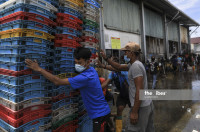
Other problems in the economic outlook that continue to affect poor households include a weak social safety net and food insecurity.
Based on the 2019 Household Income and Basic Amenities Survey, said the ministry, 5.6% of Malaysian households are considered poor, with the poverty line income (PLI) monthly threshold at RM2,208.
PLI in Malaysia, unlike many countries, measures the minimum income required to maintain a certain quality of life, taking into consideration optimum healthy food intake requirements and access to basic necessities for non-food items.
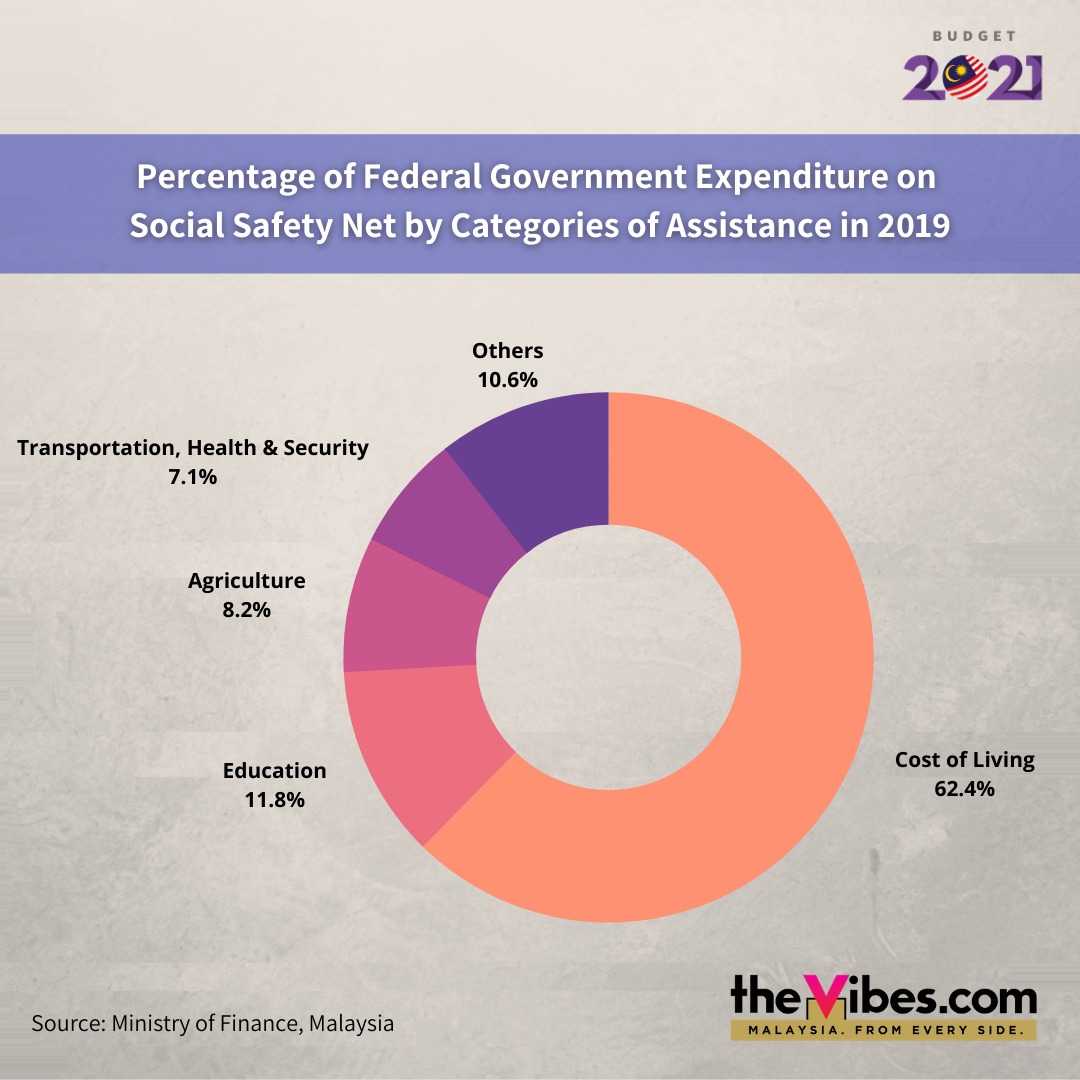
To address this, the government last year spent a total of RM26.6 billion, or 1.8% of gross domestic product, on various social safety net programmes, with the largest portion – RM14 billion – going towards minimising the impact of the rising cost of living, particularly for the poor and vulnerable.
The assistance was in the form of subsidies for cooking oil, liquefied petroleum gas, diesel and petrol, electricity, and flour, among others.
The second-largest amount of the total allocation – RM6.7 billion, or 25.3% – was spent on education, as this sector was seen as an essential enabler for social mobility and human capital development, while approximately RM1.9 billion (7.2%) was distributed in the agriculture sector, as a “disproportionate share of B40 households is in this sector”.
On food insecurity, the ministry said the problem remains despite the continued focus on the development of the agriculture sector.
In 2019, Malaysia ranked 28th in the Global Food Security Index, a lower spot than other nations with fewer natural resources, said the ministry, quoting the findings of the Economist Intelligence Unit.
Additionally, the Statistics Department this year found that the 2019 self-sufficiency ratio (SSR) indicated that Malaysia has yet to be self-sufficient in some of its staple food items.
Last year, the country's rice production met only 70% of domestic demand, while other foods with a lower SSR include sweet potato (81.7%), coconut (68.2%), cabbage (36.2%) and chili (30.8%).
“Factors contributing to the unattractive supply of staple foods include low wages in the agriculture sector, prevalence of pests and diseases, lack of technology adoption, and low interest among the younger generation in the agriculture sector.” – The Vibes, November 6, 2020