World

Jabs for votes: Lebanon’s oligarchs turn to Covid-19 bribery

Latest variant on old corruption trick sees vaccine-for-vote system gain popularity

Updated 5 years ago · Published on

Jabs for votes: Lebanon’s oligarchs turn to Covid-19 bribery
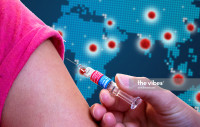
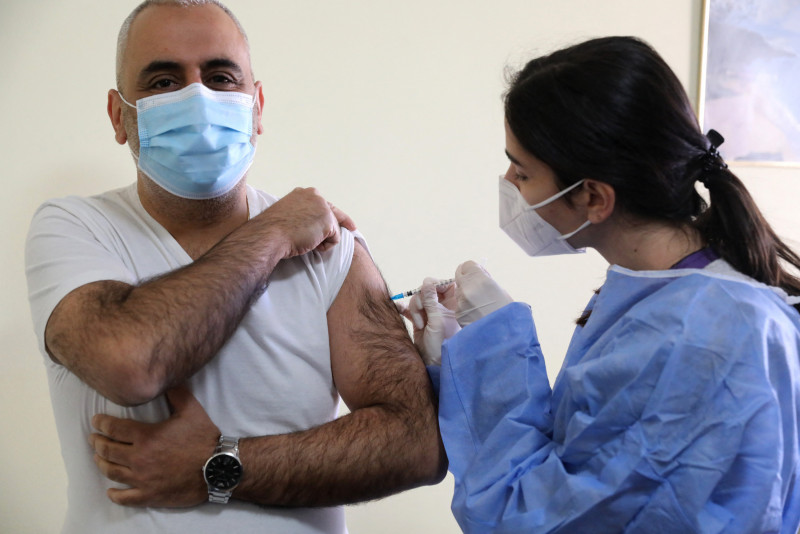
With state resources stretched to their limit by a severe economic crisis and international aid dwindling due to a failure to deliver promised reforms, politicians are turning to Covid-19 jabs to stock up on political capital. – AFP pic. June 10, 2021

BEIRUT – Lebanon’s cash-strapped leaders are bribing their base with free Covid-19 jabs ahead of next year's elections, in what observers say is the latest variant on an old corruption trick. 

The “vaccine for vote” system builds on decades-old patronage practices that have seen leaders buy their way into office by offering voters money or public sector employment.

But with state resources stretched to their limit by a severe economic crisis and international aid dwindling due to a failure to deliver promised reforms, politicians are turning to Covid-19 jabs to stock up on political capital.

“Political forces are trying to directly or indirectly make themselves a part of the equation with regards to the vaccine campaign, primarily because it is a profitable investment,” said a member of the state-run National Vaccination Committee who spoke on condition of anonymity.

Prime minister-designate Saad Hariri, a leading figure in Lebanon’s Sunni community, organised a countrywide vaccination campaign with the help of his Future Movement in early May. 

More than 7,000 people received at least one dose of the Russian Sputnik V vaccine, said spokesman Abdel Salam Moussa. Tens of thousands of new jabs are expected to arrive in the coming weeks, he said.

The Free Patriotic Movement (FPM), founded by President Michel Aoun, and its Christian rival the Lebanese Forces, have also distributed jabs through private initiatives organised by members or affiliates. 

Elias Bou Saab, a lawmaker close to FPM, rented out a private hospital outside Beirut until March next year for vaccination purposes. 

Last month, he said he would provide “20,000 doses of the Pfizer vaccine to be distributed free of charge”.

Antoine Habchi of the Lebanese Forces provided jabs for 1,600 people in the eastern region of Baalbek. “The funds were raised from the diaspora,” he said. – AFP, June 10, 2021
Related News

Malaysia / 6mth

Covid-19 cases in Malaysia stable, no deaths recorded this year – MOH

Malaysia / 7mth

Decision on suit against Rosmah over 40 missing jewellery items set for June 10

Opinion / 7mth

Trump attempting to make a run for it?

Malaysia / 9mth

Bad move to channel EPF dividends into Account 3 for festive withdrawals, cautions economist

Opinion / 1y

A tale of two administrations: How Warisan and GRS shaped Sabah’s future

Malaysia / 1y

MOH closely monitoring Covid-19 amid rising cases in neighbouring countries

Spotlight

Malaysia

Anwar receives special recognition as 10,000 Muslims gather in Putrajaya

Malaysia

Video of elderly man being assaulted goes viral on social media

Malaysia

The wide reach of corruption and organised crime in the country

Malaysia

Malaysia pushes to give smaller economies stronger voice in Asia-Pacific trade – Anwar

Malaysia

No tsunami threat to Malaysia after 5.4-magnitude earthquake hits Banda Sea

Malaysia

Who is calling the shots in Negeri Sembilan as Ismail’s position comes under scrutiny?

Opinion

Ayob Khan: When the uniform comes off, the principles remain

Malaysia

MySiren to send emergency alerts to compatible phones nationwide from Nov 29 test

You may be interested

World

Hong Kong fire survivors struggle with grief, unanswered questions one year after deadly inferno

World

Trump backs Jensen Huang's return as Nvidia CEO amid national security scrutiny

World

US weighs new tariffs on 16 trading partners, Malaysia faces 19% rate cap

World

US attorney-general declines to confirm whether Nvidia CEO was investigated

World

UN climate talks collapse as EU rejects ‘weak’ COP31 deal