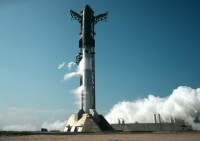
WASHINGTON – Nasa will make a second attempt to launch its powerful new Moon rocket on Saturday, after scrubbing a test flight earlier in the week, an official said today.
The highly anticipated uncrewed mission – dubbed Artemis 1 – will bring the United States a step closer to returning astronauts to the Moon five decades after humans last walked on the lunar surface.
Mission manager Mike Sarafin, said the Nasa team “agreed to move our launch date to Saturday, September the third.”
Blast-off had been planned for Monday morning but was cancelled because a test to get one of the rocket’s four RS-25 engines to the proper temperature range for launch was not successful.
Sarafin announced the date for the new launch attempt during a media briefing today, and Nasa later tweeted that the two-hour launch window on Saturday would begin at 2.17pm (2.17am on Sunday, Malaysia time).
Launch weather officer Mark Burger said there is a 60% chance of rain or thunderstorms on the day of the launch, but added that there is still a “pretty good opportunity weather-wise to launch on Saturday.”
The goal of Artemis 1, named after the twin sister of Apollo, is to test the 98-m Space Launch System rocket and Orion crew capsule that sits on top.
Mannequins equipped with sensors are standing in for astronauts on the mission and will record acceleration, vibration and radiation levels.
Tens of thousands of people – including US Vice-President Kamala Harris – had gathered to watch the launch, 50 years after Apollo 17 astronauts last set foot on the Moon.
Ahead of the planned Monday launch, operations to fill the orange-and-white rocket with ultra-cold liquid hydrogen and oxygen were briefly delayed by a risk of lightning.
A potential leak was detected during the filling of the main stage with hydrogen, causing a pause. After tests, the flow resumed.
Nasa engineers later detected the engine temperature problem and decided to scrub the launch.
“The way the sensor is behaving... doesn’t line up with the physics of the situation,” said John Honeycutt, manager of the Space Launch System programme, adding that such issues with sensors were “not terribly unusual.”
Sarafin said the team would reconvene tomorrow to assess the situation.
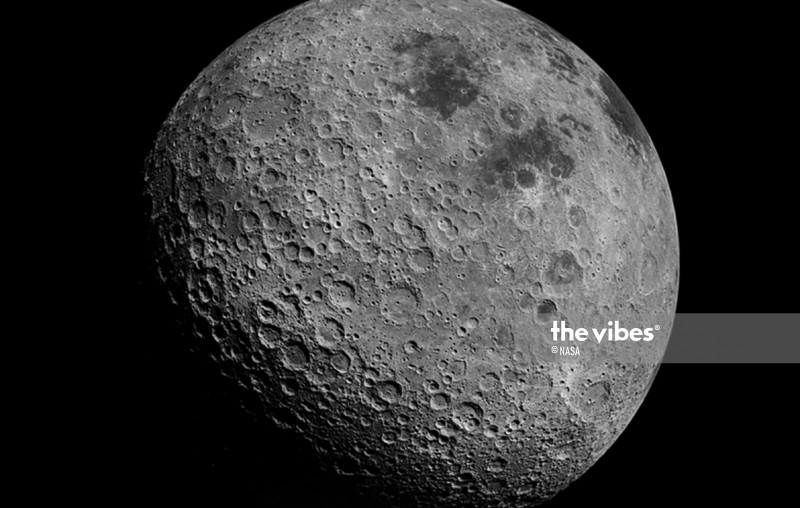
Orbiting the Moon
The Orion capsule is to orbit the Moon to see if the vessel is safe for people in the near future. At some point, Artemis aims to put a woman and a person of colour on the Moon for the first time.
During the 42-day trip, Orion will follow an elliptical course around the Moon, coming within 100km at its closest approach and 40,000mi (64,373km) at its farthest – the deepest into space by a craft designed to carry humans.
One of the main objectives is to test the capsule’s heat shield, which at 16ft (4.87m) in diameter is the largest ever built.
On its return to Earth’s atmosphere, the heat shield will have to withstand speeds of 25,000mph (40,233kph) and a temperature of 2,760°C – roughly half as hot as the Sun.
Nasa is expected to spend US$93 billion (RM416 billion) between 2012 and 2025 on the Artemis programme, which is already years behind schedule, at a cost of US$4.1 billion per launch.
The next mission, Artemis 2, will take astronauts into orbit around the Moon without landing on its surface.
The crew of Artemis 3 is to land on the Moon in 2025 at the earliest.
And since humans have already visited the Moon, Artemis has its sights set on another lofty goal: a crewed mission to Mars.
The Artemis programme aims to establish a lasting human presence on the Moon with an orbiting space station known as Gateway and a base on the surface.
Gateway would serve as a staging and refuelling station for a voyage to the Red Planet that would take a minimum of several months. – AFP, August 31, 2022