World

EU Parliament votes to ban petrol car sales by 2035

This despite conservative MEPs’ opposition, as bloc aims to be ‘climate neutral’ by 2050

Updated 3 years ago · Published on

EU Parliament votes to ban petrol car sales by 2035
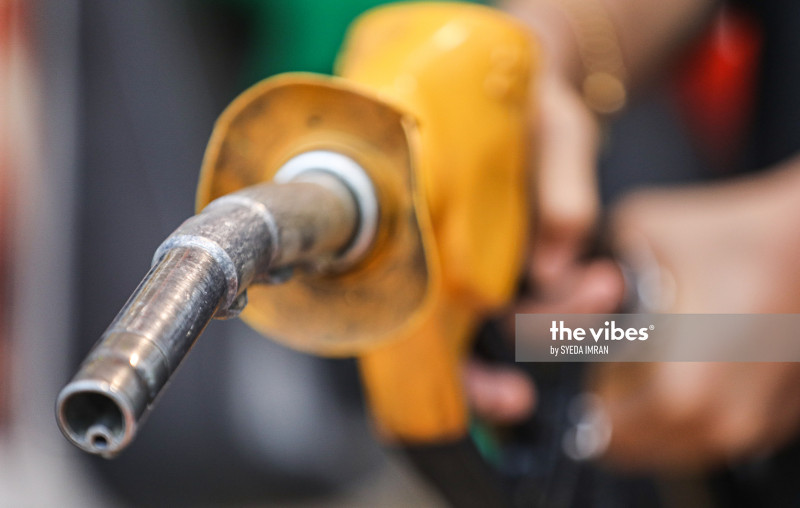
Supporters of the European Union’s move to ban petrol and diesel car sales argue it would give European carmakers a clear timeframe to switch production to zero-emission electric vehicles. – SYEDA IMRAN/The Vibes file pic, February 14, 2023

STRASBOURG – The European Parliament voted today to approve a ban on new sales of carbon-emitting petrol and diesel cars by 2035, clearing the final legislative hurdle.

European Union member states have already approved the legislation and will now formally nod it into law, despite opposition from conservative MEPs, the European legislature’s biggest group.

Supporters of the bill had argued that it would give European carmakers a clear timeframe in which to switch production to zero-emission electric vehicles.

This in turn will support the EU’s ambitious plan to become a “climate neutral” economy by 2050, with net-zero greenhouse gas emissions.

“Let me remind you that between last year and the end of this year China will bring 80 models of electric cars to the international market,” EU Vice-President Frans Timmermans warned MEPs.

“These are good cars. These are cars that will be more and more affordable, and we need to compete with that. We don’t want to give up this essential industry to outsiders.”

But opponents argued that industry is not ready for such a dramatic cut off in production of internal combustion engine vehicles – and that hundreds of thousands of jobs are at risk.

“Our proposal is... to let the market decide what technology is our best to reach our goals,” said MEP Jens Gieseke, a member of the centre-right European People’s Party.

Gieseke declared that arguments from Green and socialist MEPs that electric cars are cheaper to run had been rendered “null and void” by the crisis of soaring energy costs.

“In Germany 600,000 people work on ICE (internal combustion engine) production, those jobs are at risk,” he declared, urging the European Commission to rethink plans to also extend the ban to trucks and buses.

Opponents also argue car batteries are produced abroad by Europe’s competitors like the United States, but Timmermans argued that thanks to EU-backed investment European production would increase.

The law passed the Strasbourg assembly by 340 votes to 279, with 21 abstentions. – AFP, February 14, 2023

Related News

Business / 2y

WTO rules against EU’s delegated act, deems it discriminatory towards M’sian palm oil biofuels

Business / 3y

A long road: Southeast Asia's complicated charge to develop EVs

Business / 3y

Govt to ensure EV ownership available to all: Tengku Zafrul

World / 3y

EU may fine TikTok millions for violating children’s privacy

Food / 3y

Beer consumption in Europe: evolving with the times

Places / 3y

We’re full: Europe’s fight against overtourism

Spotlight

Malaysia

Anwar receives special recognition as 10,000 Muslims gather in Putrajaya

Malaysia

Video of elderly man being assaulted goes viral on social media

Malaysia

The wide reach of corruption and organised crime in the country

Malaysia

Malaysia pushes to give smaller economies stronger voice in Asia-Pacific trade – Anwar

Malaysia

No tsunami threat to Malaysia after 5.4-magnitude earthquake hits Banda Sea

Malaysia

Who is calling the shots in Negeri Sembilan as Ismail’s position comes under scrutiny?

Opinion

Ayob Khan: When the uniform comes off, the principles remain

Malaysia

MySiren to send emergency alerts to compatible phones nationwide from Nov 29 test

You may be interested

World

Myanmar records world's highest landmine casualties for third consecutive year

World

US weighs new tariffs on 16 trading partners, Malaysia faces 19% rate cap

World

Trump backs Jensen Huang's return as Nvidia CEO amid national security scrutiny

World

US attorney-general declines to confirm whether Nvidia CEO was investigated

World

Hong Kong fire survivors struggle with grief, unanswered questions one year after deadly inferno