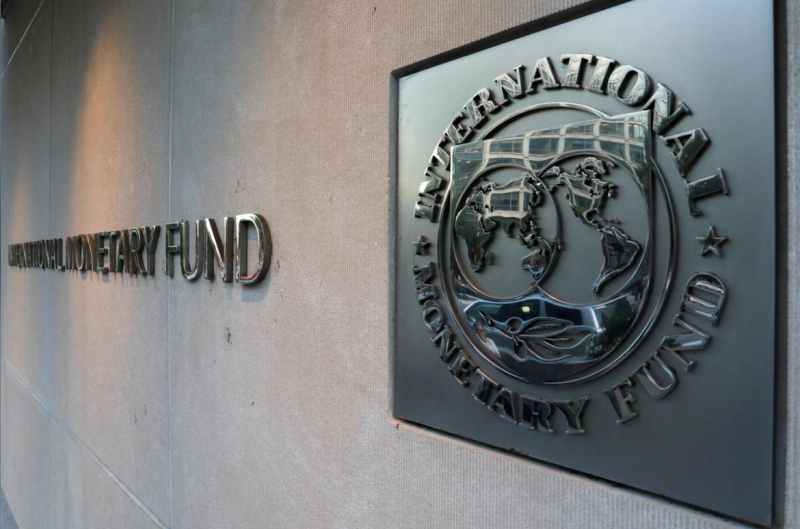
TUNIS – Tunisia’s crisis-stricken economy needs “deep reforms” such as slashing its vast public wage bill, the International Monetary Fund’s outgoing country chief has said as the government seeks a new bailout.
Jerome Vacher, speaking in an interview at the end of his three-year term as the global lender’s envoy to the North African country, said the coronavirus pandemic had helped create Tunisia’s “worst recession since independence” in 1956.
“The country had pre-existing problems, in particular budget deficits and public debt, which have worsened,” he said.
Tunisia’s debts have soared to nearly 100% of gross domestic product.
Its GDP plunged by almost 9% in 2020, the worst rate in North Africa, only modestly offset by a 3% bounceback last year.
That is “quite weak and far from enough” to create jobs to counteract an unemployment rate of 18%, Vacher said.
He said young graduates face particular challenges in finding work, despite the country being able to offer “a qualified workforce and a favourable geographic location”.
Since dictator Zine El Abidine Ben Ali was toppled by mass protests in 2011, Tunisia’s troubled democratic transition has failed to revive the economy.
President Kais Saied sacked the government and suspended parliament on July 25 last year, and the government has since asked the IMF for a bailout package – the fourth since the revolution.
Tunisian authorities say they are optimistic about reaching a deal by the end of this quarter.
Vacher said discussions are still at an early stage and that the IMF first wants “to understand what they’re planning in terms of economic reforms”.
“It’s an economy that needs very deep, structural reforms, especially to improve the business environment,” the French economist said.
Hefty public wage bill
But Vacher added that the government “understands the main challenges and problems, which is already a good basis”, urging Tunisia to come up with a “solid and credible” reform plan.
To do that, it must tackle its huge spending on public sector salaries.
“The public wage bill is one of the highest in the world,” Vacher said.
In a country of 12 million people, more than half of public spending goes to paying the salaries of around 650,000 public servants – a figure that does not include local authority wages.
Nor does the figure include Tunisia’s hefty public companies, which often hold monopolistic positions across sectors from telecoms to air transport and employ at least 150,000 people at the public expense.
All this drains resources that the state could be investing in education, health and infrastructure, Vacher said.
“There needs to be a big efficiency drive in the public sector (to meet) public expectations in terms of services,” he said.
The IMF has long called for a restructuring of Tunisia’s system of subsidies on basic goods such as petrol and staple foods, which essentially see more state funds doled out to the biggest consumers – a system Vacher said was unfair.
The lender recommends scrapping subsidies and instead creating a system of targeted cash payments to needy groups.
The IMF’s recommendations are important as not only could it lend billions more to Tunisia, but other bodies including the European Union have said they will condition future aid on the global lender’s green light.
For Vacher, the biggest responsibility lies in the hands of Tunisia’s decision-makers.
“It’s up to them to act to find solutions, put forward reforms, a vision and an ambition,” he said.
While many observers have predicted doom for Tunisia’s public finances, Vacher said the situation is “not optimal, but manageable”.
But “there is an urgent need to make the public finances more sustainable.” – AFP, January 16, 2022