Business

Bringing back GST best way to help with govt finances: economist

Tax rate should be set slightly lower than 6% to avoid shocking those still recovering from pandemic, he says

Updated 4 years ago · Published on

Bringing back GST best way to help with govt finances: economist
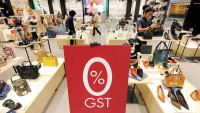
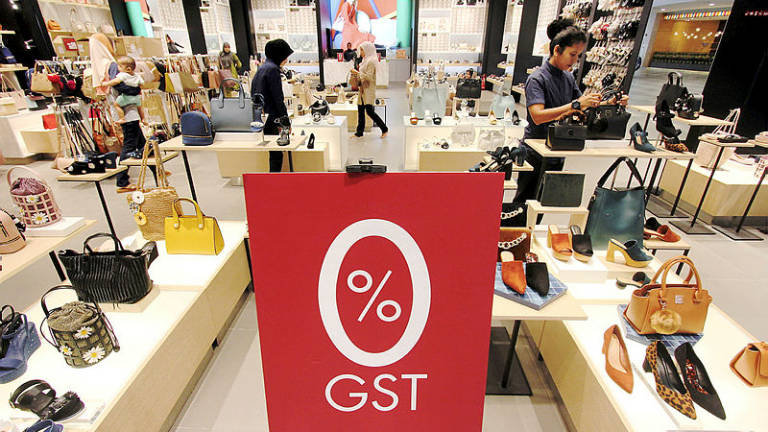
The GST was first introduced in Malaysia on April 1, 2015, at 6%, but it was suspended on June 1, 2018, and finally abolished and replaced by the SST on September 1, 2018. – Bernama pic, June 11, 2022

ARAU – The proposed reinstatement of the Goods and Services Tax (GST) is seen as the best measure for reviving and increasing the nation’s revenue amid the country’s transition to the endemic phase which began on April 1, according to an economist.

Universiti Teknologi Mara Perlis senior lecturer (economy) Assoc Prof Azman Daim said the proposed reintroduction of the tax – a value-added tax which is collected at various stages of the supply chain – is to replace the Sales and Service Tax (SST).

“The benefits of implementing GST include enabling the government to generate more stable revenue and it being more efficient. The tax should be implemented to help tackle the people’s economic problems and curb the excessive rise in prices for certain basic necessities,” he said here today.

However, he said the GST rate, which was previously set at 6%, should be slightly lower so the people would not be “shocked” as many are still grappling with the effects of the Covid-19 crisis.

Prime Minister Datuk Seri Ismail Sabri Yaakob was reported as saying recently that the possible reinstatement of the GST is seen as capable of broadening the country’s revenue base, and that the government has not ruled out the possibility of reinstating it as an effective way to increase national income and help combat inflation and the rising cost of living.

He said the people need to understand and accept it first before the government decides to introduce any new taxation system.

The GST was first introduced in Malaysia on April 1, 2015, at 6%, but it was suspended on June 1, 2018, and finally abolished and replaced by the SST on September 1, 2018.

The current rates for the sales tax are 5% and 10%, while the service tax is at 6%. – Bernama, June 11, 2022

Related News

Opinion / 7h

When costs rise, revenue matters

Malaysia / 1d

Zahid’s GST proposal revives scrutiny of PAS’ ‘haram’ ruling

Business / 1mth

Generating new revenue sources: Malaysia should look into marine-fuel industry, says expert

Malaysia / 1mth

Federal revenue to hit RM380.8 billion in 2027, tax collections lead growth

Malaysia / 1mth

Budget 2027: Federal spending rises to RM459.84 billion

Business / 2mth

CMH Specialist Hospital records revenue of RM40.22 million

Spotlight

Malaysia

Anwar receives special recognition as 10,000 Muslims gather in Putrajaya

Malaysia

Video of elderly man being assaulted goes viral on social media

Malaysia

The wide reach of corruption and organised crime in the country

Malaysia

Malaysia pushes to give smaller economies stronger voice in Asia-Pacific trade – Anwar

Malaysia

No tsunami threat to Malaysia after 5.4-magnitude earthquake hits Banda Sea

Malaysia

Who is calling the shots in Negeri Sembilan as Ismail’s position comes under scrutiny?

Opinion

Ayob Khan: When the uniform comes off, the principles remain

Malaysia

MySiren to send emergency alerts to compatible phones nationwide from Nov 29 test

You may be interested

Business

Three Malaysian firms placed on US trade blacklist over advanced technology diversion fears

Business

Govt moves to block seven US-blacklisted entities from accessing local data centres

Business

Oil retreat offers limited relief as ringgit weakens against firmer US dollar

Business

Pengerang needs to create wider economic value, not just store more oil, says expert

Business

MAG to add 10 Boeing Dreamliners in long-term fleet expansion drive

Business

NexG share surge puts spotlight on RM7.5b takeover proposal as SC examines trading

Business

Oil prices holds above US$80 as Hormuz attacks heighten supply concerns