MALAYSIA’S prison system is undergoing a quiet but profound transformation, shifting from punishment to purpose.
Under a bold rehabilitation agenda, inmates are no longer referred to as “prisoners” but as “prospects”—individuals seen not for their past, but for their potential to re-enter society with dignity.
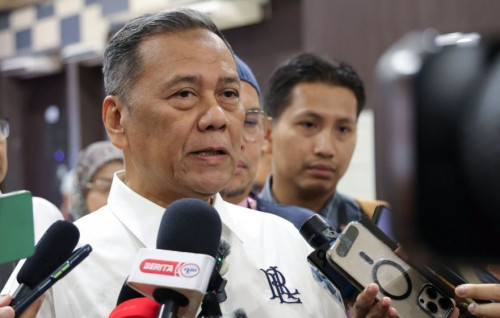
“Rather than being labelled as offenders, they are ‘prospects’, people who can be reformed and return to contribute positively to society,” said Prisons Commissioner General Datuk Abdul Aziz Abdul Razak in a recent interview with Bernama.
Over 90,000 individuals currently reside across 43 correctional facilities in Malaysia. Despite the scale, Abdul Aziz insists that every single one of them has the opportunity to change through the Human Development Programme (HDP), which focuses on health and treatment, rehabilitation and education, and vocational skills development.
“This is no longer a place of punishment, but a place of renewal,” he said.
The HDP runs in four phases, beginning with personal discipline and character building, followed by vocational training and reintegration into society via parole, conditional release and work-release schemes.
Integral to the reform is the Prisoners’ Rehabilitation and Welfare Trust Account, which manages proceeds from economic activities across six sectors—including food services, manufacturing, tailoring, agriculture and livestock—performed by the prospects. The income is reinvested into training and welfare, with a portion saved for post-release use.
“Many enter prison without any skills. They leave not just with certificates, but confidence,” Abdul Aziz said, noting that stable employment is key to preventing repeat offences.
Since 2012, over 19,000 inmates have received Technical and Vocational Education and Training (TVET) certification, with 1,421 undergoing training in 2025 alone through partnerships with the Department of Skills Development (JPK) and the Construction Industry Development Board (CIDB).
In parallel, Malaysia’s prison tahfiz programme, which now runs in 14 facilities, has seen nearly 300 inmates memorising the Quran—part of a holistic approach combining spiritual and vocational growth.
“TVET builds life strength; tahfiz brings inner peace. Together, they shape a new individual with a strong identity,” said Abdul Aziz.
He also highlighted the RM7.38 million Second Chance Programme (PEKA), launched in 2024, which has enabled hundreds of inmates to train in fields such as welding, electrical work, forklift driving and waste management. An additional RM7 million has been allocated for 2025, aiming to train 1,000 more prospects and connect them with companies like MRCB.
The results are striking: reoffending rates among TVET and community rehabilitation participants are below 0.3 per cent—far beneath the international benchmark of 20 per cent. In contrast, those who did not undergo skills training faced recidivism rates of up to 12 per cent within three years.
“When someone has a job, skills and confidence, they have direction. That is the real cure to repeat offending,” he said.
Yet, Abdul Aziz acknowledged that the true test comes after release, when former inmates face societal stigma. To address this, the department has introduced the Community Rehabilitation Programme and the Corporate Smart Internship (CSI) scheme, which offers companies tax incentives of up to RM4,000 per hire.
After more than three decades of service, Abdul Aziz remains deeply committed to the philosophy that everyone deserves a second chance.
“A prospect who rises early to attend a farming workshop, dons a work uniform, or recites the Quran is a sign of life after darkness. Our duty is to make space for them to live with dignity,” he said. - October 13, 2025