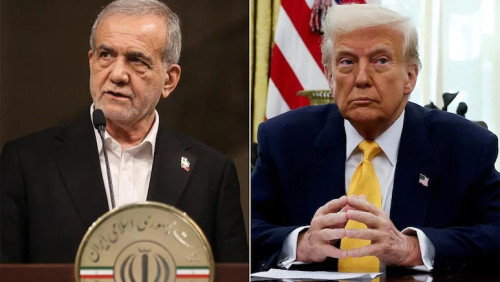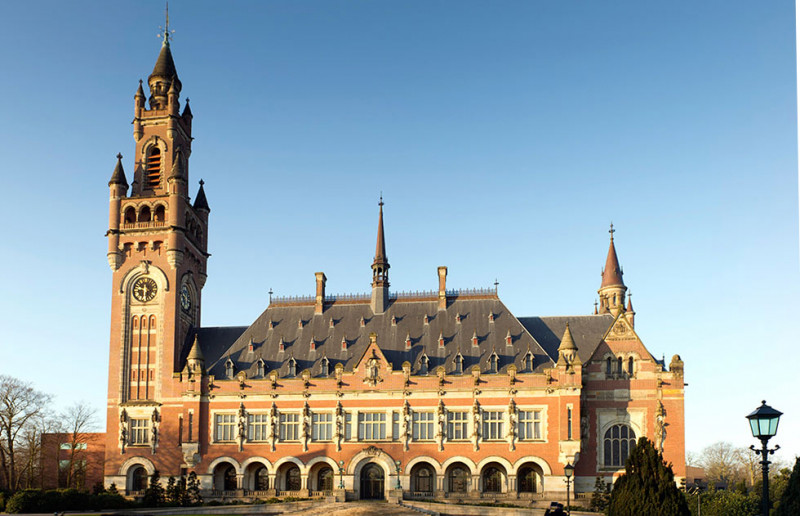
THE HAGUE – Iran opens its legal battle before the United Nation’s top court today to unfreeze billions of dollars in US assets, which Washington says must go to victims of terrorist attacks blamed on Tehran.
The case before the International Court of Justice (ICJ) comes as hopes fade of reviving a landmark deal – which former US president Donald Trump withdrew from in 2018 – that sought to tame Iran’s nuclear ambitions.
Tehran took Washington to the Hague-based ICJ in 2016 after the US Supreme Court ordered some US$2 billion (RM9.09 billion) in Iranian assets to be frozen, ordering the cash to go to survivors and relatives of attacks blamed on the Islamic republic.
These included the 1983 bombing of a US Marine barracks in Beirut, which killed 299 people including 241 US soldiers, and the 1996 Khobar Towers bombing in Saudi Arabia which left 19 dead.
Iran, however, said the freezing of the funds breached the 1955 Treaty of Amity with the United States, an agreement signed before Iran’s 1979 Islamic Revolution severed relations between the countries.
Tehran argued the United States had illegally seized Iranian financial assets and those of Iranian companies – and with Iran’s clerical regime facing economic difficulties after sanctions and runaway consumer prices, resolving the case is crucial.
In turn Washington had unsuccessfully tried to disqualify the lawsuit by arguing that Iran’s “unclean hands” – a reference to Tehran’s suspected backing of terrorist groups – should disqualify its lawsuit to recover the US$2 billion of assets.
The US announced in October 2018 that it was pulling out of the Treaty of Amity after the ICJ in a separate case ordered Washington to lift nuclear-related sanctions on humanitarian goods for Iran.
The ICJ is the top court of the United Nations and was set up after World War II to resolve disputes between member states. Its rulings are binding and cannot be appealed, but it has no means of enforcing them.
Stalled talks
Today’s hearing, to which US representatives are set to reply on Wednesday, comes as hopes fade to revive a 2015 nuclear deal between Tehran and the West which gives Iran sanctions relief in return for restricting its nuclear programme.
Trump pulled out of what he called the “terrible” international nuclear agreement in 2018 and began reimposing sanctions, prompting Tehran to roll back its commitments made under the pact, the Joint Comprehensive Plan of Action, or JCPOA.
Talks have been ongoing in Vienna since April last year, aimed at restoring the agreement by lifting sanctions on Tehran once again and pushing Iran to fully honour its obligations.
But European powers nine days ago raised “serious doubts” over Iran’s sincerity in seeking a nuclear agreement, adding that Tehran continued “to escalate its nuclear programme way beyond any plausible civilian justification.”
The statement by France, Germany and Britain came a day after US Secretary of State Antony Blinken assessed that Iran’s latest reply on the nuclear deal is a step “backwards”.
EU foreign policy chief Josep Borrell – who had been coordinating talks over the past year and a half – said last week that negotiations were in “stalemate.”
The disputes with Iran include Tehran’s insistence that the UN nuclear watchdog close a probe into three undeclared sites suspected of previous nuclear work. – AFP, September 19, 2022