WASHINGTON – The US Supreme Court today revisits the divisive question of whether race can be used as a factor in deciding who gets admitted to some of America’s elite universities.
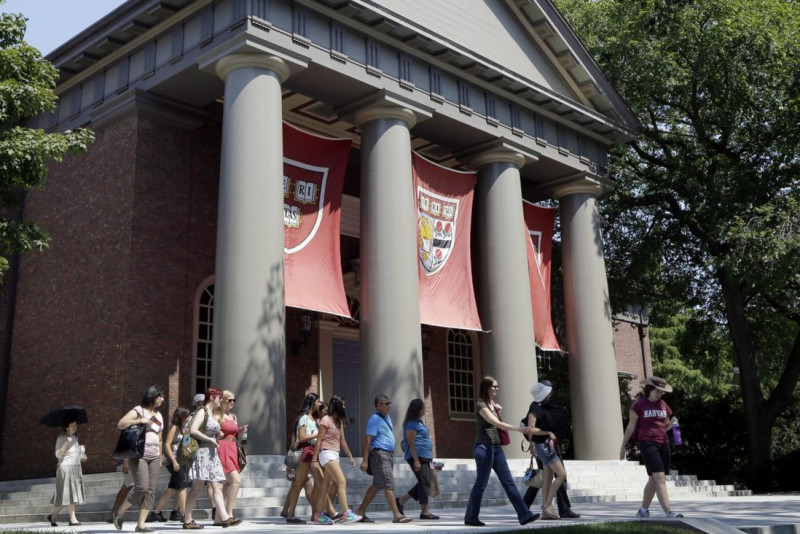
The court is to hear two hours of arguments on the use of race in admissions to Harvard and the University of North Carolina (UNC) – respectively the oldest private and public institutions of higher education in the country.
Harvard and UNC, like a number of other top US schools, use race as a factor in trying to ensure an adequate representation of minorities – historically African Americans – in the student body.
The policy, known as “affirmative action,” emerged from the Civil Rights Movement in the late 1960s to help address the country’s long legacy of discrimination in higher education.
Previous courts have upheld affirmative action – in 2016 by a single vote.
But the current conservative-dominated court may be poised to issue another historic reversal like it did in June, when it overturned the landmark 1973 “Roe v. Wade” decision guaranteeing a woman’s right to abortion.
“I suspect that the majority opinion will say that the use of race is never permissible in order to achieve diversity,” said Steven Schwinn, a law professor at the University of Illinois Chicago.
“This would be consistent with the court’s trend toward viewing racial identity or racial labelling alone – for any reason, including laudable reasons – as a violation of the constitution.”
Affirmative action has been controversial from the start, and a number of white students have mounted legal challenges over the years, claiming “reverse discrimination.”
Nine states have banned affirmative action at public universities including California, where voters did so in a ballot proposition in 1996 and rebuffed an attempt to revive the policy in 2020.
In a 1978 decision – Regents of the University of California v. Bakke – the Supreme Court banned the use of quotas in university admissions as unconstitutional.
But the court said race or ethnic origin can be considered as one factor among others in admitting students to ensure a diverse student body and to combat previous discrimination that could have prevented marginalised students from being accepted to those schools.
‘Uphold this precedent’
Conservatives currently enjoy a solid 6-3 majority on the Supreme Court, including three justices nominated by former president Donald Trump, a Republican.
The latest suits challenging affirmative action were brought by a group known as Students for Fair Admissions, which claims more than 20,000 members.
In 2014, the group filed suits against Harvard and UNC claiming that their race-conscious admissions policies discriminate against equally qualified applicants of Asian American origin.
Asian American students, they argued, are underrepresented at the schools, considering what they called their record of superior academic achievement.
After losing in lower courts, Students for Fair Admissions is seeking a ruling from the Supreme Court that the constitution prohibits any form of discrimination.
Schwinn said a broad ruling in their favour could potentially impact areas beyond higher education and “ban all government use of race for any purpose,” in hiring or contracting, for example.
The administration of Democratic President Joe Biden, a number of major American companies and the American Civil Liberties Union (ACLU) have weighed in on the side of the universities.
“Race-conscious admissions practices help create a diverse student body that benefits the educational experiences of all students,” said ReNika Moore, director of the ACLU Racial Justice Programme.
“Time and again, lower courts and the Supreme Court have recognized universities’ ability to consider race in the admissions process in order to help foster this,” Moore said. “The Supreme Court must uphold this precedent.”
The Supreme Court will hear one hour of argument in each case, with Ketanji Brown Jackson, the court’s first Black woman, sitting out the Harvard case because she has served previously on the Board of Overseers at the school. – AFP, October 31, 2022