TOKYO – Japan’s government approved a major defence policy overhaul today, including a significant spending hike, as it warned China poses the “greatest strategic challenge ever” to the country’s security.
In its largest defence shake-up in decades, Japan vowed to up security spending to 2% of gross domestic product (GDP) by 2027, reshape its military command, and acquire new missiles that can strike far-flung enemy launch sites.
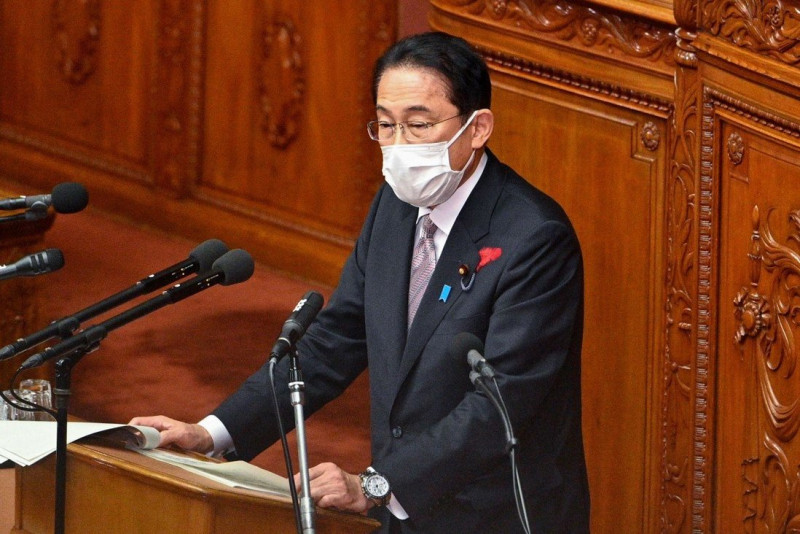
“Fundamentally strengthening our defence capabilities is the most urgent challenge in this severe security environment,” Prime Minister Fumio Kishida said last week.
Polls suggest Japan’s public largely backs the shift, worried by growing Chinese military power and geopolitical developments like the war in Ukraine.
But the changes could still be controversial as Japan’s post-World War II constitution does not officially recognise the military and limits it to nominally self-defensive capabilities.
The moves are outlined in three defence and security documents approved by the cabinet today.
They describe Beijing as “the greatest strategic challenge ever to securing the peace and stability of Japan”, as well as a “serious concern” for Japan and the international community.
In response, the government plans to raise its defence spending to 2% of GDP by fiscal 2027, bringing Japan in line with Nato member guidelines.
That marks a significant increase from historic spending of around 1% and has sparked criticism over how it will be financed.
The money will fund projects including the acquisition of what Japan calls “counterstrike capacity” – the ability to hit launch sites that threaten the country.
The documents warn that Japan’s current missile interception systems are no longer sufficient and a “counter strike capacity is necessary”.
‘Radically strengthen’
While Japanese governments have long suggested that counter strikes to neutralise enemy attacks would be permissible under the constitution, there has been little appetite to secure the capacity.
That has shifted with the continued growth of Chinese military might and a record volley of North Korean missile launches in recent months, including over Japanese territory.
Still, in a nod to the sensitivity of the issue, the documents rule out preemptive strikes, and insist Japan is committed to “an exclusively defence-oriented policy”.
The counter strike capacity will involve both upgrading existing Japanese weaponry but also buying United States-made Tomahawk missiles, reportedly up to 500.
Other changes include the establishment of a permanent joint command for Japan’s armed forces as well as enhancement of the country’s coastguard.
Among the documents is the National Security Strategy, which is being updated for the first time since its 2013 launch.
Its language on relations with both China and Russia has hardened significantly.
The strategy document previously said Japan was seeking a “mutually beneficial strategic partnership” with Beijing, a phrase that has disappeared from this iteration.
Instead it suggests a “constructive and stable relationship” and better communication.
China’s Foreign Ministry today urged Japan to “reflect on its policies”.
“Japan disregards the facts, deviates from the common understandings between China and Japan and its commitment to bilateral relations, and discredits China,” ministry spokesman Wang Wenbin told reporters of the new stance.
And while Japan’s strategy document once called for enhanced ties and cooperation with Russia, it now warns that Moscow’s military posturing in Asia and cooperation with China are “a strong security concern”.
Japan has joined Western allies in imposing sanctions on Moscow over its invasion of Ukraine, sending relations into a deep freeze.
The strategy contained in the documents represents a major evolution of Japan’s military posture, according to Chris Hughes, professor of international politics and Japanese studies at the University of Warwick.
“The Japanese government will depict these changes as necessary, moderate, and wholly in line with previous defence posture,” he said.
Still, “they are going to, in the words often used by the (ruling) Liberal Democratic Party itself in policy documents, ‘radically strengthen’ Japan’s military power”, added Hughes, author of the book Japan as a Global Military Power. – AFP, December 16, 2022