TUNIS – Tunisians on Saturday overwhelmingly boycotted an election for a new Parliament which will have virtually no authority following a power grab by President Kais Saied in the birthplace of the Arab Spring.
Electoral board president Farouk Bouasker said that by the close of polls at 6pm (1700 GMT), just 8.8% of the nine-million-strong electorate had cast votes.
That would be the lowest participation in any poll since the revolution.
Opposition groups boycotted the election, saying it was part of a “coup” against the only democracy to have emerged from the 2011 uprisings across the region.
Bouasker acknowledged turnout was “modest” but said it could be explained by “the absence of foreign financing, in contrast to previous elections”.
“This was the cleanest election, with no vote-buying,” he said.
Preliminary results are expected tomorrow.
The National Salvation Front, the main opposition alliance which includes Ennahdha, described the low turnout as “seismic”, and called on the president to bring all political forces together for consultations.
The ballot followed three weeks of barely noticeable campaigning, with few posters in the streets and no serious debate among a public preoccupied with day-to-day economic survival.
It comes almost a year and a half after Saied deployed military vehicles to suspend Parliament, following months of political deadlock and economic crisis exacerbated by the coronavirus pandemic.
His power grab sparked fears for the democracy ushered in after the ouster of dictator Zine El Abidine Ben Ali.
In the impoverished central city of Kasserine, Mohammed Jraidi, 40, said he was boycotting the poll.
“I don’t have any faith in the political class,” he said. “They’ve used us as lab rats for all types of elections while the economy gets worse and worse.”
Tunisia expert Youssef Cherif said that even though turnout was just 9%, the Parliament being elected “is supposedly more democratic and representative than all previous parliaments in the country's history”.
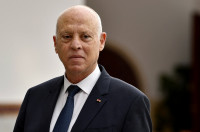
Saied, a former law professor, used a July referendum to push through a new constitution giving the presidency almost unchecked powers, laying the ground for a rubber-stamp legislature.
Yesterday, he told voters that Tunisia was “breaking with those who destroyed the country”.
“Those elected today should remember that they are being watched by their voters, and that if they’re not up to the job their mandate will be taken away,” he said at a polling station in a comfortable district of Tunis.
But on Friday many Tunisians voiced indifference.
In the polluted phosphate-mining hub of Gafsa, Aicha Smari said she had voted partly because of the symbolism of the date, 12 years to the day since street vendor Mohamed Bouazizi burned himself to death in an act of protest that triggered the Arab Spring.
But Abdel Kader Tlijani, 55, said he was boycotting.
Successive governments “killed the revolution and killed our dreams”, he said.
In the capital, 59-year-old engineer Ridha called the vote a “farce”.
“This president has disappointed us and he’s dragging us towards the abyss,” he said, declining to give his full name.
Saied’s moves against an unpopular political system were initially supported by Tunisians tired of the messy and sometimes corrupt democratic system installed after the revolution.
But almost a year and half on, the country’s economic woes have gone from bad to worse.
Inflation is around 10%, and frequent shortages of milk, sugar, and petrol are fuelling a growing wave of emigration.
The previous legislature had far-reaching powers in the mixed presidential-parliamentary system enshrined in Tunisia’s post-revolution constitution.
But the new chamber “won’t be able to appoint a government or censure it, except under draconian conditions that are almost impossible to meet,” said political scientist Hamadi Redissi.
Candidates were required to stand as individuals, in a system that neuters political parties including Saied’s nemesis, the once-powerful Islamist-leaning Ennahdha party.
Analyst Hamza Meddeb said the election was a “formality to complete the political system imposed by Kais Saied and concentrate power in his hands”.
Almost all of Tunisia’s political parties, including Ennahdha, boycotted the vote. – AFP, December 18, 2022